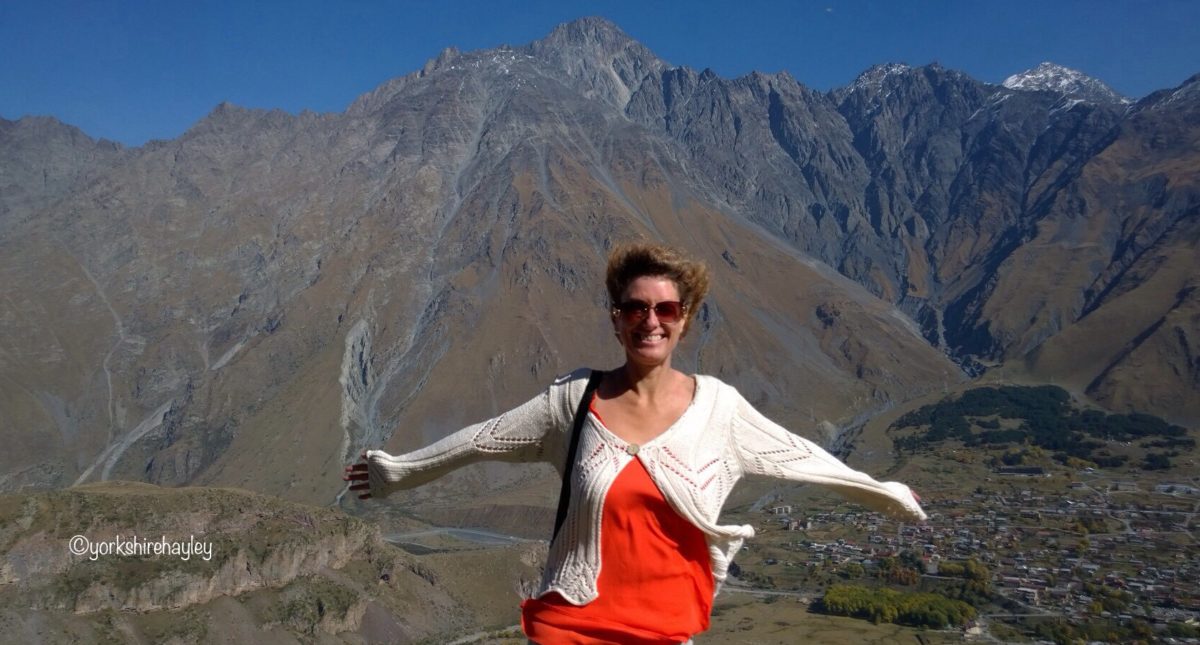
I love the opera and have been lucky enough to see opera in a lot of different places around the world. I was looking for an opera in a new country and my research led me to Opera on the Sanctuary at Beglik Tash in Bulgaria.
The event I was here to see – Opera on the Sanctuary 2025
I didn’t have many countries in Europe left to visit, but Bulgaria was one of them, so I started to look at options for the opera there. Initially I looked at the capital, Sofia, but then I came across something a little bit different, Opera on the Sanctuary.
The rocks form part of the Megalithic Thracian Sanctuary known as Beglik Tash
I have attended open air theatre events before, but never an open air opera, so here was the chance for me to experience something new.
Exploring the rocks dedicated to the god, the Sun and the goddess, the Mother
Opera on the Sanctuary takes place at Beglik Tash on the Black Sea coast of Bulgaria. It is a relatively new event, this was the 6th Opera on the Sanctuary Festival with the performance of a different opera every Saturday in August. I hadn’t seen Rigoletto for more than 25 years, so I decided that would be a good opera to get a ticket for.
The gap in the rocks has been aligned to let the sunlight pass through at noon
My first challenge had been to buy a ticket. Beglik Tash is near the resort of Primorsko and this is a Black Sea resort that mainly receives local tourists, the overseas tourists tend to go further up the coast. Certainly, I could not find any packages that included a hotel in Primorsko. This meant that they don’t generally expect foreign tourists to attend the opera festival at Beglik Tash and so it’s difficult to buy a ticket if you’re not Bulgarian.
The Path of Trial can only be completed by those with pure and intact souls
I emailed the opera house in Burgas who organise the event to see if there was any way I could get a ticket and luckily one of the staff said she would reserve a ticket for me. I wasn’t entirely sure that this would work, but I emailed again a week before the performance and was told the ticket had been reserved for me to collect on the evening of the performance.
Within the rocks is the marriage bed of the Sun and the Mother
Beglik Tash is about 5km north of Primorsko on the wooded Maslen Cape at Strandzha Mountain. Beglik Tash is a megalithic rock Thracian Sanctuary, the largest sanctuary left by the Thracians on the southern Black Sea coast in Bulgaria. Archaeologists believe it was built in the 14th century BC. This sanctuary comprises of stones arranged in a circle on a rock surface and was likely used as a sundial, a calendar and a temple. The sanctuary was believed to be magical, where the ancient Thracians paid their respects to their god, the Sun and their goddess, the Mother.
The different parts of the sanctuary represent a clock and a calendar
I got a taxi to Beglik Tash well ahead of time so that I could explore the sanctuary before the performance began. I hate getting taxis, but it’s difficult to walk to Beglik Tash, not only does it take almost an hour and a half from Primorsko, it’s along a narrow road first through the sand dunes and then through the wood with no pavement to walk on. Not an ideal hike.
The sun begins to set over Beglik Tash
The taxi driver dropped me at the gate and told me I had to walk. It took me a good 20 minutes to walk through the woods to get to the site of Beglik Tash.
Beglik Tash is located on the wooded Maslen Cape on Strandzha Mountain
The chairs were already set out for the opera, but the site of Beglik Tash was still officially open to the public to look around, so I went to explore.
The rocks have been specifically arranged in a circle to form a clock
Beglik Tash is located in forest territory which was part of the hunting residence of the former communist head of state until 1989 and wasn’t discovered by archaeologists until 2003.
Some modern additions have been placed at Beglik Tash by tourists
The rocks and stones of various sizes have been arranged into a labyrinth of rock corridors. A person with a pure and intact soul is able to pass through this labyrinth, known as the Path of Trial. I walked around the sanctuary without a problem, although I’m not entirely sure that I followed the correct path.
Walking through the labyrinth of rock corridors trying to find the Path of Trial
The rocks representing the Sun and the Mother have carved grooves on them where the Thracians would pour the ritual liquids of wine, milk, olive oil and water.
The path weaves through the woods
I came to one part of the sanctuary where it said the stones were aligned so that sunlight could pass through at midday and there was also a set of stones arranged in a circle to represent a sun clock.
A series of rocks carefully placed by the ancient Thracians
After my exploration I headed back to the seating area and tried to work out how to get my ticket. The entrance booth remained closed, so I took a seat and waited for it to open. I was spotted by staff who asked me for my ticket and I tried to explain that I didn’t have a ticket, but I had reserved one by email from England. The lady asked me my name and recognised it because she had been emailing me and they had reserved me a seat on the front row right in the middle.
The grooves in the rocks were used to pour ritual liquids
I was thrilled with my seat. I had a great view. Despite the heat during the day, it was a lot cooler at night, so I was pleased I had brought a cardigan to cover my arms, it made it much more comfortable for me.
There are several large balanced rocks around Beglik Tash
The light was now fading, the orchestra took their place, the opera was about to begin. There was a screen set up to the side of the stage for subtitles, but they were only in Bulgarian. However, I wasn’t too concerned about that, I knew the story of Rigoletto and the fact that the subtitles were in a language I didn’t understand and in the Cyrillic alphabet which I can’t read very well, meant that I had no distractions taking my eyes away from the stage.
Getting close to the stage where the performance of Rigoletto will take place
There was a stage on the rocks where the first act took place. The rocks behind the stage were lit up with a projection of windows against them, so that it looked like the performers were in a palace. I was very impressed.
The opera is due to be performed on this rocky stage
I settled into the opera, enjoying the music, taking the occasional sip of wine. I loved the open air performance and the mystical venue really added to the atmosphere.
The orchestra is assembled on a platform next to the stage
If the lighting for the first act was impressive, there were audible gasps as the stage lit up for the second act. This time the performers had moved away from the stage and were performing on an area on the rocks themselves. One of the rocks was lit up to look like a cottage, it was very clever.
Screen for subtitles in Bulgarian
There was a short interval and then the opera continued. The third act took place back on the built stage in the palace.
The stage is set for Act One
Then came the final act on the flat area of rocks. The scene had changed and the rocks were lit up to represent another house and a woodland stream. Together with the sublime performance, it was mesmerising.
The rocks light up to look like the windows of a palace
I hadn’t seen Rigoletto for more than 25 years, so I don’t remember much about that performance, but this one was amazing. The orchestra were very good and the opera singers who took the main parts were all excellent. What really set this apart was the open air setting at Beglik Tash, the performers amongst the mysterious rocks, hauntingly lit to represent the scene especially in the second and final acts. It had been well worth attending.
The chorus on stage during Act One
Now I had to try and get back to my hotel. I had toyed with the idea of walking back, even if it was going to take me over an hour, but I decided it would be too dangerous because it was a narrow road with no footpaths. There would be a lot of cars driving along it after the opera and I was worried I might get run over in the dark. I rang for a taxi, but I wasn’t sure when it would turn up.
The rock is cleverly lit to look like a cottage in Act Two
One of the parking attendants was very nice to me, told me where to stand to wait for my taxi, out of the way of all the cars as they drove off the sanctuary. As I watched the cars departing, a vehicle pulled up with two ladies in it. The driver spoke English and asked if I would like a lift back to Primorsko. I gratefully accepted her offer.
Rigoletto and Gilda perform on the rock stage in Act Two
She explained that she lived in London, but was from Bulgaria and came back every summer with her son. She said that she and her friends had got the last four tickets for the opera tonight and they had thoroughly enjoyed it too. Two of her friends had stayed behind with the cast, but she and her companion in the car were going to a club somewhere outside Primorsko. She invited me along, but I declined, I didn’t want to be even further away from my hotel than I had been at the sanctuary.
The stage is ready for Act Three after the interval
As the road from Beglik Tash comes into Primorsko, my hotel was located just around the corner, so I asked to be dropped off there, although I would have been happy with anywhere in Primorsko.
The rocks are lit to represent another cottage and a woodland stream in the final act
The road from the sanctuary is narrow and we didn’t pass a taxi as we drove back to Primorsko, so I suspect the taxi company never sent one for me. As a last resort, I could have walked, but as I said my goodbyes to the ladies who had given me a lift, I was very thankful for the kindness of strangers.
The end of a mesmerising performance
If you enjoy opera, want to try something a little bit different and are up for an adventure, I would thoroughly recommend Opera on the Sanctuary. I’m sure there will be another set of operas performed in August 2026 on the mystical rocks at Strandzha Mountain.
I travelled to Beglik Tash in August 2025.
Beglik Tash is located near Primorsko on the Black Sea Coast of Bulgaria.
Tickets for the performance of Rigoletto at Opera on the Sanctuary cost 60 Bulgarian leva, approximately £25. You can reserve a ticket by emailing Burgas Opera House if you do not have a Bulgarian mobile number.
On my balcony at Hotel Plamena Palace
I stayed at the Plamena Palace at the northern end of Primorsko near the sand dunes. I booked my room through Booking.com. A double room with a balcony and breakfast included cost £83 per night.
View of the Plamena Palace pool from my balcony at night
I travelled to Primorsko by bus from Sofia Central Bus Station. The bus journey takes around 6 hours with one stop. I travelled to Primorsko with the coach company Union Ivkoni. I booked my ticket direct online. The return ticket cost £34.
I travelled to Sofia in Bulgaria with Lufthansa via Germany. I booked direct with Lufthansa. The flight cost £283 including hold luggage.
My large double room at the boutique Art Hotel 158 in Sofia
I stayed at the excellent Art Hotel 158 in Sofia. I booked through Hotels.com. A double room costs £46 per night.
When I decided to fly to Incheon for my trip to Asia, I wanted to spend some time in South Korea. I had a limited amount of days I could spend here, so I wouldn’t be able to go too far afield, but as Incheon and Seoul are in the northern part of the country, it meant I was close enough to be able to do a day trip to the Demilitarised Zone, the famous DMZ.
Map of the Demilitarised Zone at Imjingak Park
A very brief history of the creation of the DMZ is that Korea was divided into two at the end of the Second World War by the United States and Soviet Union having previously been a Japanese colony. The idea was Korea would become an independent country, however, both sides of the divide formed their own government, each claiming to be the legitimate government of Korea which led to the Korean War in the early 1950s. The war ended with the signing of the Korean Armistice Agreement in 1953 with North and South Korea becoming separate independent countries with a 4 kilometre wide demilitarised zone between the two and a joint security area. Since then North Korea has been a closed off, secretive country with very few people allowed in.
Statues in Imjingak Park
Up until 2023, it was an option, with advance planning, to do a specialist tour to the Joint Security Area with a talk from a North Korean defector and going to Panmungak where you can set foot into North Korea. Only a few people are allowed on each tour as this is a very high tension area. I imagine it would have been an interesting tour.
Tourist Train at Imjingak Park
Sadly, it was no longer possible to visit the Joint Security Area since an American soldier had tried to defect into North Korea the previous year. The soldier was facing disciplinary actions from the US Army and apparently decided bolting into North Korea was a better option. It was the first defection of a US soldier into North Korea in over 40 years. The soldier was sent back to the States later in 2023, but the JSA tours have still not resumed. On this tour, I got to within 120 metres of the North Korean border.
No entry onto the bridge
There are several options when doing a day trip to the DMZ. It is possible to go there on the train yourself, but it’s still very restricted, so there’s no real advantage to doing that. In addition, if you go on a tour you get driven to all the different places in the DMZ and there are lots of add ons to choose from as well as the main places, so I chose the one with the cable car included and the Gamaksan Red Suspension Bridge.
Bridge viewed from the Peace Gondola
The pick up was in Seoul close to one of the underground stations, as usual I was there really early, just to make sure I got there on time. Even then we still ended up waiting for people, despite them saying they won’t wait for latecomers. Our guide was a Korean lass called Moon who took us to the first stop on our day long tour, Imjingak Park.
Mangbaedan Altar where memorial ceremonies are performed on National Holidays
Imjingak Park is a memorial to the victims of the Korean War. It was built in 1972 in the hope that it would be possible to unify North and South Korea and is the location of several interesting things on the tour. The first thing you see is the signs mapping the DMZ. The Military Demarcation Line is located 7 kilometres away. We were very close to North Korea.
Carriages on the tourist train at Imjingak Park
We were taken to look at a steam train which does short rides for tourists and was also next to the shops where you could buy North Korean currency. I’m not interested in that kind of thing, so I took a couple of photos and passed.
Train used during War to transport UN supplies into North Korea full of bullet holes
There is another train on the railway line in another area of the park, this one is rusted and full of bullet holes. This train was used during the Korean War to transport supplies for UN troops up to the North Korean capital, Pyongyang. It was the last train to cross the border between North and South Korea and many North Koreans would jump on it to try and escape to the South. On New Year’s Eve 1950, US soldiers stopped the train on the South Korean side and armed with machine guns completely destroyed the engine with over 1,200 bullets, because the UN feared the train might fall into the hands of the North Koreans. The train remains on the railway line continuing to rust as another reminder of the Korean War.
Sitting in solidarity with a symbol of female victims of War in Korea
Then there were the Peace Statues, two young women with an empty chair at the side of them. Our guide explained about the separation of families during the Korean War where one part of a family ended up in North Korea and the other in South Korea as they did not realise they would not be able to freely cross the border. She said that the two countries have an agreement for separated families to be reunited just once. It runs on a lottery system because there is such high demand, but she said that her grandmother had been separated from her brother and they were able to meet after being separated for decades. After the one meeting, they were back in their respective countries and were unlikely to ever be able to see each other again. Even so, they were lucky. Most separated families have no communication at all and do not know what happened to their loved ones. Every year thousands of names are crossed off the lottery list because those people have since died.
Crossing the Imjin River on the Paju Peace Gondola
Our guide wasn’t a fan of the President of North Korea. She said Kim Jong Un wanted to be the embodiment of his grandfather who was the first president of North Korea. She said that was why he had put on weight and had that ridiculous haircut.
Travelling across the Imjin River in the Paju Imjingak Peace Gondola
The Freedom Bridge was where 12,733 Korean Prisoners of War crossed to freedom in 1953 following the Armistice Agreement. You can see the end of it, but you are not allowed to walk onto the bridge.
Approaching the end of the gondola ride
It is located behind the Mangbaedan Altar, made up of 7 sculptured stones. Mangbaedan is in North Korea and immediately across from Imjingak. Any Koreans who have been separated from their families in the North, can hold memorials for them here facing their home country. These are especially performed on national holidays, such as Lunar New Year and Korean Thanksgiving known as Chuseok.
On the rooftop viewing platform at the gondola
I would have loved to have had longer to look round, but I had to rush to go on the gondola that I had booked. However, Imjingak is a place that anyone can go, you don’t need any special permissions to go there like on the DMZ tours, so if you wanted to, you could spend a lot longer there if you visited independently.
The Military Road is a footpath that leads to the wish ribbon zone
As it was, I was on a DMZ tour, so my next stop was to go on the Paju Peace Gondola. Only two of us in the group had chosen to go on the gondola, me and an Australian woman, who I ended up sitting next to on the bus and we also took photos for each other at the various locations on the tour. The Peace Gondola takes you a mile across the Imjin River.
On the rooftop viewpoint before crossing the Imjin River back to Imjingak
Once again, we had very limited time to do the gondola ride and properly explore over the other side of the river. Crossing the river you can see two bridges spanning the two sides from the cable car. Once over at the other side we managed to climb to the rooftop viewing area and get some photos.
Gamaksan Suspension Bridge
The area on the far side of the gondola is within the civilian control line area and you have to sign a security pledge not to take photos of guard posts, surveillance equipment, barbed wire and suchlike. As long as you avoided these areas there was a section in front of the gondola that you could go into.
Just about to cross the 150m suspension bridge
You could also walk along the military road to get to the peace lighthouse, wish ribbon zone, peace pagoda, observatory and reproduction of the footbridge where the presidents of North and South Korea met on 27 April 2018. I didn’t have time to do any of these. It was a little disappointing. But I enjoyed the Paju Peace Gondola ride and the view from the rooftop.
Tour groups cross the Gamaksan Suspension Bridge
Peace was definitely a recurring theme in Imjingak, there is obviously a hope that one day the countries will be united, but as I continued on my tour, that seemed a long way away. Despite the meeting between the two presidents in 2018, North Korea closed its borders again during the Pandemic and they still haven’t reopened.
Halfway across Gamaksan Suspension Bridge
I went on the gondola back across the river and this time we were in a crystal cabin that had a glass floor, which was a bonus. Then we boarded the bus to travel to our next stop, the Gamaksan Suspension Bridge.
The official name of the suspension bridge is Gloucester Heroes Bridge
There are two suspension bridges you can visit when going on a DMZ tour. One is the Majang Reservoir Suspension Bridge, which as the name suggests, crosses a reservoir and the other is Gamaksan Suspension Bridge which leads to the trail to the top of Mount Gamaksan. I chose the tour which included Gamaksan Suspension Bridge. The bridge, which opened in March 2018, is 150 metres long and is officially named Gloucester Heroes Bridge, dedicated to the First Battalion Gloucester Regiment of the British Army who fought in the Korean War.
Hiking to the waterfall on the footpath to Mount Gamaksan summit
The Gamaksan Suspension Bridge is a bright red bridge built to harmonise with nature and connecting the Seolmari Valley to Mount Gamaksan. It is possible to hike to the top of Mount Gamaksan which is 675 metres high, again on this tour there wasn’t the time for that, but we did have time to hike to a waterfall.
A small waterfall on the trail
First of all, Moon took personal photos of everyone in the group standing on the bridge and then we were given time to explore. First of all I crossed the bridge and being a suspension bridge it does wobble a bit. That didn’t bother me, I’ve been over loads of suspension bridges and they don’t tend to freak me out unless they have low sides. This definitely didn’t fall into that category. There was a memorial at the other side of the bridge with its official name of Gloucester Heroes Bridge and almost everything on it was written in Korean other than the name and the fact it was 150 metres long.
Another view of the length of the bridge
I then continued along the path on the other side up and down steps until I reached a small waterfall running over a rock. I understand there are more powerful waterfalls along the trail if you carry on walking to the top of Mount Gamaksan, but this was as far as I was able to walk in the time I had.
Viewing tower near Gamaksan Suspension Bridge
When I crossed the Gamaksan Suspension Bridge to head back to the coach I had just enough time to walk to the viewing tower where I could see the suspension bridge from above and get an idea of the size of the valley and surrounding mountains from a more elevated position.
At the viewpoint with Mount Gamaksan behind me
After this I had to go to the bus. We were now on a strict time schedule. This was where the DMZ part of the tour began.
Entering the Dora Observatory area
Our first stop on this element of the tour was to the Dora Observatory. Situated on top of Mount Dora, the viewing platform gives the observer views into North Korea. That was what we were all here for. To spy into North Korea.
This building has now been replaced by the new Dora Observatory
We were now in a restricted zone and you have to join a tour to come here. It is possible to sign up to do a tour here as an independent traveller, but it’s much easier to join an organised tour like I did, especially if you’re staying in Seoul.
Observation platform of Dora Observatory with North Korea behind me
We were taken to the observation platform and there were sets of binoculars for you to look through. In the distance you could see the Imjin River which forms a large part of the border at the 38th parallel. At the other side of the river is North Korea.
North Korea is at the other side of the Imjin River
Looking through the binoculars you can clearly see the city of Kaesong with a few high rise buildings. Closer to the river is the propaganda village of Panmunjon where you might be able to catch sight of farmers at work. I could see some people, but they were a long way away, so you couldn’t make much out. There was also a military tower across the river and there were soldiers patrolling on it, again, it was very difficult to make them out due to the distance.
Looking through binoculars for a closer view of North Korea
It was rather strange being able to legitimately spy into North Korea, but obviously the North Koreans are well aware of it so they are able to control what’s going on within viewing distance of Dora Observatory. All the same it’s fascinating to be able to see into this closed off, secretive country, even if what you see is North Korean propaganda.
A close up of the border city of Kaesong
We were only allowed a short time at the observatory and then were marched off back to the bus. I had the opportunity to take a few photos on the road while walking back to the coach park. I went to the Dora Observatory just after they opened the new building, so the old building was no longer accessible. However, the old building was still there, so I took a photo of it.
Dora Observatory Deck where everyone is fascinated with North Korea
Next up was the Third Tunnel of Aggression. The North Koreans tried to dig their way into South Korea several times and four of the tunnels have been discovered, although it is believed there are more.
The North Korean flag flies in the distance
The Third Tunnel of Aggression is one of the 4 known tunnels that run under the border between North and South Korea. The third tunnel is the most westerly along the border and the closest one to the South Korean capital of Seoul. It was discovered in October 1978 following the detection of an explosion in June. It took 4 months to locate the tunnel and intercept it. This tunnel threatened the Armistice Agreement and was considered an act of aggression by South Korea, hence the name.
Photo of entrance to Third Tunnel of Aggression – provided by VIP Travel
After initially denying they dug the tunnel, North Korea said it was part of a coal mine, but there is no coal in the area, so this was just a cover story. It is believed that North Korean soldiers would have used the tunnels to march into South Korea in a surprise invasion.
Inside the Third Tunnel of Aggression – photo provided by VIP Travel
The tunnel has now been secured with 3 concrete barricades and is now open to tourists as part of the DMZ tour. The tunnel is a mile long and you can walk along it, 73 metres underground, as far as the third barricade which is 120 metres from the border with North Korea.
Further image of Third Tunnel of Aggression – provided by VIP Travel
The tunnel is a lot steeper than you would think and it’s quite a long walk. You have to wear a hard hat to go into the tunnel. There isn’t a time limit to walk down the tunnel, so if you find it hardgoing, you can take it more steadily.
In the exhibition hall at the Third Tunnel
You walk down the tunnel towards the North Korea border until you reach the third barricade. You can then look through a hole in the wall and see the second barricade. And that’s as close as you can get to North Korea.
Sitting in the D M Z
Photography is banned in the Third Tunnel. We had to put all our belongings in a locker before we could enter the tunnel. It was disappointing not to be able to take photos, but these were the security rules we had agreed to. After walking to the end of the tunnel and peering through the hole in the wall at the third barricade, then came the walk up the steep incline out of the tunnel.
This One Earth sculpture at Third Infiltration Tunnel
However, our guide, Moon did have some photos of the inside of the tunnel which she shared with us, so even though they aren’t my photos, I still have some reminders of what the inside of the tunnel was like.
Another pose at the DMZ letters
There is an exhibition hall attached to the tunnel with the lockers where you had to put your belongings and this also had models of Joint Security Area soldiers. As this was a display, you were allowed to take photos here, so I got a photo with the models of the soldiers.
View of soldiers in North Korea – photo provided by VIP Travel
We also had a little bit of time in the outside area where everyone wanted their photo at the DMZ letters. I took several photos here and had a few taken of me, my favourite was of me sitting in the letter D.
Close up of North Korea – photo provided by VIP Travel
There was also a sculpture entitled This One Earth which shows a globe split into two with figures either side trying to push it back together, another symbol of the separation of families when the peninsula was divided.
Unification Village
After a short time in the outdoor area, we went back to the bus for our final stop of the day, the Unification Village.
In the small park in the Unification Village
Paju’s Unification Village is a peaceful location not far from the Third Tunnel. There is a tourist shop and restaurant and a small park here. This was our lunch stop, but I passed on lunch and had a brief wander around the shop and then headed outside. There is a small park with a bench and a heart made out of flowers and leaves with the sign Unification Village above it as a sign of love and peace.
Sculpture representing the important crops of soya, ginseng and rice
This is also an area where people live and work and farming is an important industry here. The 3 main crops grown here are soya, rice and ginseng. There is a sculpture to signify the local importance of these crops, which I did rather like. After spending some time in the sunshine in the Unification Village, it was now time to go back to Seoul.
Ginseng sculpture
The one thing I would say about the tour is that it was not long enough. Certainly the first stop, especially as I also went on the gondola, needed to be longer. We were on a tour with a lot of things to fit in and there are restrictions and time limits for the tours to certain areas, such as the Third Tunnel and Dora Observatory, so there probably wasn’t anything the tour operator could do about this, but if you wanted to spend more time there it is possible to just visit Imjingak without going on a tour and you can stay as long as you like.
At Dora Observatory Deck with North Korea in the background
Similarly, I would have been happy to spend longer at the suspension bridge, which is another place you can visit independently without needing special permissions. If I went back and visited the bridge on my own, I would consider staying longer and doing the hike up Mount Gamaksan.
Ready to cross the Gamaksan Bridge again
I would have definitely liked to have more time in the area where the tunnel was. I never bother with lunches, as the food is usually not to my taste, it was easy enough for me to simply wait until I got back to Seoul, especially as we were back by about 3pm. I didn’t need as long at the Unification Village, there wasn’t a great deal there. But I have to accept other people needed time for lunch and also about the strict time restrictions for the tour operators, so this isn’t a criticism, just a personal preference.
One last photo between the DMZ letters
Even though the tour was a bit rushed in places, I still thoroughly enjoyed it and would recommend it to anyone. If I went back to South Korea I would definitely do the tour again, maybe try the other suspension bridge next time. I would probably visit Imjingak independently so that I could spend more time there as there are no restrictions or special requirements to go there other than having ID and signing a security pledge if you go on the gondola. I might visit the suspension bridges on my own too, if I was easily able to get there. If they re-start the Joint Security Area tours, I would happily work my itinerary around that. I really enjoyed travelling in South Korea, I think I will be back at some point.
Standing by the map of the Demilitarised Zone
I travelled to South Korea in May 2024.
I booked my tour with VIP Travel through Get Your Guide. The tour departed from City Hall in Seoul. The tour cost £55 which included transport from Seoul, all the stops mentioned in the post, the gondola ride and the Gamaksan Suspension Bridge.
I stayed at Glad Hotel Yeouido in Seoul. A standard double room cost £90 per night. I booked this through booking.com.
I used the underground to get around Seoul city centre. I purchased a T-Money card which you load with cash and then tap in and out on the underground, buses and taxis in Seoul, like an Oyster Card in London. A single journey in the city centre costs approximately 75p.
I flew to Incheon Airport from Manchester via Abu Dhabi with Etihad Airways. The return flight cost £628 and included a free 2 night stopover in Abu Dhabi. The flight time from Abu Dhabi to Incheon is 8 hours 25 minutes.
I was on the ferry to Grímsey and around 3 hours later we were almost there. After sailing on the Atlantic Ocean with no land in sight, I could now see the island in the distance.
The distant lighthouse from the island’s East coast path
I could see the orange lighthouse on the south of Grímsey and also my guesthouse was visible as we got close, it couldn’t have been any handier, basically it was just at the top of the pier, a couple of minutes’ walk.
The Northern tip of the island of Grimsey
The guesthouse had a kitchen and a lounge and one downstairs room. All the other rooms were upstairs, including mine and to get to it I had to climb a loft ladder. It was a bit awkward, I climbed to the top of the ladder and my room was just to the left. I had to open the door still standing on the steps and then sit on the floor to get into my room, there wasn’t the space to stand on the floor next to the door as it opened outwards. But it wasn’t impossible. You then dropped the hatch so you could walk across the upper floor and get to the bathroom. There was only one other room occupied tonight, by an American father and son. They headed out to explore and I wasn’t going to be far behind them.
The upstairs of my guesthouse on the island
I decided to ditch the winter coat and waterproof trousers and wear my down jacket and leggings so I’d be more comfortable on my long hike. My plan was to walk the perimeter of the island. This route is 6 miles and takes 6 hours, allowing for photo stops and time to enjoy the scenery and the experience of the walk. I had no intention of racing around the island as fast as I possibly could. I wanted to savour my time on Grímsey.
A sculpture of a ship in Sandvik
You don’t need to stay overnight on Grímsey. Most days the ferry stays for 5 hours, so it is possible to get the morning ferry, spend 5 hours on the island and then head back to the mainland in the evening.
At the beginning of my perimeter hike
Anyone who comes to Grímsey as a daytripper will want to go to the Arctic Circle, so my route was going to take me to the lighthouse which was on the southerly extreme of Grímsey and in the opposite direction to where all the daytrippers were bound to walk. Even those staying overnight seemed to head straight to the Circle, so once out of the village of Sandvik I didn’t see a soul.
A new church is being built to replace the historic one that burned down
I walked down towards the church, a plain, wooden building just out of the town centre. I walked into the churchyard and up to the door to see if it was open. It was, and to my surprise, it was a shell inside. Lots of pieces of wood and tools, but no seats or anything. It wasn’t until I got back to Reykjavik and went into Hallgrimskirkja, the iconic church in the Icelandic capital, that I discovered why the inside of Grímsey Church was a mere husk.
The southern coast of the island
The original church on Grímsey burned down on 21 September 2021. It is thought that the old electrics in the church were the cause of the fire and from the first sparks, the wooden church was a pile of ashes within minutes. Nothing could be saved, everything inside was completely destroyed.
An abandoned house on the landscape
There was no mention of this on any information boards when I was on Grímsey. I found in general there was a lack of information on the island, but maybe part of the charm was making discoveries for yourself.
The southern cliffs of Grimsey
However, there was an extensive display in Hallgrimskirkja and as part of the exhibit were 2 bells that Hallgrimskirkja have donated to the church in Grímsey, which will be shipped to the island when the construction is complete.
Sheep were my only companions on my otherwise lonely hike
After the church, I followed the road out of the village and down to the southerly tip of the island. There are a few small islands off the coast of Grímsey, so I stopped and took a photo of those. There was an abandoned house up on the hillside and beyond that was the southern coast and a beach. In the distance the bright orange 9 metre tall lighthouse beckoned.
A beach on the south of the island
I followed the road up to the lighthouse where there was a picnic table and plenty of opportunities to take photos of the lighthouse and the coastline. The bright orange colour of the lighthouse make it an appealing subject in photographs and I used my selfie stick and my tripod to get a few photos with me in them too. I got lots of photos of the lighthouse from different angles and as I followed the path away from the lighthouse, there were some nice shots behind me too, this was the angle where I could get the door of the lighthouse in the frame.
Posing at Grimsey Lighthouse
The road ran out beyond the lighthouse and I followed a slightly muddy path along the east coast towards a gate. This is the path less trodden on Grímsey. Most people will walk the west coast both north and south, but not many bother walking along the eastern cliffs, especially not where I ended up walking on the ankle breaking marshland!
Looking back at Grimsey lighthouse as I walk along the east coast path
Grímsey is pretty flat, but it is higher in the middle and it is a bit of a climb to get to the highest point. As I went through the gate, at first I didn’t realise that I had managed to leave the hiking route behind as I followed the coast. But as I picked my way along the marshy terrain, taking care with every step as I was never quite sure how far my feet were going to sink into the undergrowth, I worked out that somewhere I’d gone wrong.
Sheep inhabit the marshy terrain of Grimsey
I slowly followed what looked like a sort of path. I couldn’t get lost, I was on a tiny island, but I had read not to get too close to the edge of the cliffs as the ground had become unstable because of burrowing puffins! There were no puffins around in August, they had left the island about 6 weeks ago, but their empty burrows could still be a possible hazard.
The desolate east coast path
Gradually the path seemed to take me a little further away from the cliff edge and I began to climb towards the middle of the island. As I climbed to the highest point, I could see the main hiking trail. I wasn’t sure exactly where I’d gone wrong, but I was grateful to be back on a path where I could walk without testing every step to see if my ankle disappeared into the spongy brush.
I had the path to myself as I followed the eastern cliffs
I continued to walk towards the northern part of the island and to the Arctic Circle. As I walked further along close to the eastern shoreline I saw a huge hill in front of me. I hoped I didn’t have to climb that. It did look pretty steep. Was this the most northerly point of the island? Would I have to climb this enormous hill to get to the Arctic Circle?
The marshy, uneven and potentially ankle breaking ground
I consulted my map and was relieved to discover this was not the most northerly part of then island. The path veered off to the left, but there seemed to be a more minor path straight ahead so I decided to follow that. This was my second mistake of the day.
I managed to stray off the official path and was picking my way through marshy tundra
It soon became clear that I had followed another unofficial track that I shouldn’t be on and was once again picking my way over the potentially ankle breaking marshy tundra.
One of the hills in the middle of the island
I could see the official path over to the left and made the decision to cut across to it in the most direct way I could as I couldn’t see a way round to it if I carried on straight ahead. I most definitely shouldn’t have been walking here, but if I turned round I would have been following a track I shouldn’t have been on either, so I didn’t see that it made much difference.
I was relieved the path didn’t take me up this hill on the cape in the northern part of Grimsey
This was the only time I actually saw anyone on my lonely hike, a couple with a little girl who were walking back to the village. Testing every step, it took me less time to get back to the hiking trail than I anticipated and with relief I resolved not to take any more detours.
The sphere marks the Arctic Circle on Grimsey
Once I rejoined the official trail I could see the most northerly section of the island and the sphere ahead which was the marker for the Arctic Circle.
I have almost reached the Arctic Circle in Iceland
Grímsey is very strange when it comes to the Arctic Circle. There are 2 Arctic Circle markers, one by the airport which is in the wrong place and the other is the concrete sphere on the northerly peninsula. Neither of them have any signage that state this is the Arctic Circle. At the airport there is a signpost with signs pointing to various places around the world and the distance it is to them, but nothing that says Arctic Circle.
No information or signpost on the sphere indicating it is the Arctic Circle marker
At the sphere there is nothing at all. No signpost, no information, absolutely nothing.
It was a breezy spot at the Arctic Circle
In fact the only place where you see the words Arctic Circle are on a signpost on the road to the airport pointing that the Arctic Circle is in the direction of the airport. So there’s a sign pointing in the direction of the Arctic Circle but nothing to indicate you have reached the Circle.
The Arctic Circle sphere viewed from the northern tip of the island
Maybe the residents thought the sphere needed no explanation, why else would you put a concrete sphere on the island far away from all the buildings of the village and the airport? The concrete sphere could only mean that you had reached the Arctic Circle.
I decided not to hike along the northern cliffs
I stopped to take a lot of photos of me at the Arctic Circle. This was me crossing the Circle in country number 6 out of 8 and I had a marker to commemorate it, even if it didn’t say Arctic Circle on it. I even looked on the sphere to see if there was any sort of inscription carved into it, but found nothing.
The northern cliffs of the island of Grimsey
Despite there being no bold “Arctic Circle” proclamation, I took lots of photos and then continued on the path. I was going to walk right to the northern tip of Grímsey. It was getting later now, but I had food at the guesthouse, so I didn’t need to worry about the restaurant being open when I got back and this far north in August, I still had plenty of daylight left.
Reaching the breezy northern tip of the island of Grimsey
I walked to the end of the path and looked around trying to work out which particular point was the northerly tip of the island. I consulted my map and went as close to the edge of the cliff as I dared, set up the tripod to take more photos and then decided that was enough. I’d noticed there was a bit of a hill to climb to get back to the village on the west coast path and it was going to take me another hour if I carried on taking photos.
The northern tip of Grimsey reaching out into the Atlantic Ocean
This hike had already taken 5 hours, not that I hadn’t thoroughly enjoyed it, apart from the bits where I’d had to pick my way over the marshy ground, but Grímsey was a place that I really loved.
I was as excited to reach the northern tip of Grimsey as I was to cross the Arctic Circle
I got a stunning photo of the sun starting to sink in the sky by a cove. I couldn’t get down to the cove, but that didn’t matter, the view from this location was amazing.
The sun begins to set over a cove on the western part of Grimsey
By now I was getting cold and tired, so I reduced the number of photos I took as I continued down the western coastline. However, as I got close to the airport, I couldn’t resist walking over to the signpost indicating the distance to various destinations around the world and taking some photos there. Then it was the final haul back to the guesthouse for something to eat.
Hiking along the western cliffs with the northern part of Grimsey behind me
The next day, I had until 2 o’clock before I had to catch the ferry back to the mainland, so I decided I was going to go back up to the Arctic Circle and the northernmost tip of the island one last time.
The northern cape of Grimsey
I called at the signpost again and took a few photos and then stopped at a place with a view of the cove and the northern peninsula that I’d missed out last night because I’d had enough. I got some beautiful photos from there and took more at the spot where I’d got my sunset photo the night before.
A morning hike before catching the ferry
Then I went back to the sphere and took yet more photos and finally to the most northerly point and got another set of photos.
The western cove during the day
I’d pushed the time as much as I could, I now had to walk back to the village. If I had time I could grab something quick to eat from the restaurant before getting on the ferry.
Grimsey Airport
I knew I had enough time that I didn’t need to walk at breakneck speed, so I enjoyed my hike and the view as I headed back to the village.
A signpost points towards the Arctic Circle
I had enough time for a piece of hot apple and caramel cake in the restaurant. It was very nice. I regretted not setting off on my walk earlier and getting here earlier to savour the food, but never mind.
Signpost near the airport indicating the distance from Grimsey to the rest of the world
I bought myself a shot glass to celebrate my time on Grímsey and no doubt at the airport on the way home I would buy something to fill it!
The latitude and longitude of the island of Grimsey
Now it was time to say goodbye to Grímsey and I really had loved it here. It’s definitely somewhere I would go back to if I had the opportunity, next time I would plan things better. If I went again, I would also go when the puffins were there, it would be wonderful to see them.
Enjoying my morning hike back to the Arctic Circle
However, Grímsey was very quiet when I was there and I had loved that about it too. That was because it was low season now, it was getting colder and the puffins had gone.
My hiking destination is the distant northern tip of Grimsey
When I had been considering travelling to Grímsey in either June or July during puffin season the guesthouses were both sold out on some days and not just on Summer Solstace like you might expect. So there would certainly have been more people about. Having said that, my guesthouse had 6 rooms and the other guesthouse was a similar size, so it wasn’t like there would have been no room to move.
As close to the edge of the northern tip of Grimsey as I dare to stand
I think even at its busiest time, I could probably have done much of that hiking route in the south and be on my own for most of it. And I’m almost certain I could take a wrong turn across that marshland and have an isolated spot on the island all to myself.
You can just make out the Arctic Circle sphere in the distance
I travelled to Grímsey in August 2023.
I got the ferry from Dalvik to Grímsey. A one way ticket costs 4,000 ISK which is approximately £25. During the summer there are ferries on Sunday, Monday, Wednesday, Thursday and Friday. They all depart from Dalvik at 0900h. They return from Grímsey at 1400h, 1600h or 1700h depending on the day. Tickets for foot passengers can only be booked online through the Road Administration website.
My single room in Guesthouse Gullsol
I stayed at Guesthouse Gullsol on Grímsey, which is just a short walk from the harbour. A one night stay in a single room with a shared bathroom cost £56. I booked this through Expedia.
Steep stairs to get up to the bedrooms in Guesthouse Gulsol
I stayed at Hotel Dalvik on my return from Grímsey. A one night stay with a shared bathroom cost £46. I booked this through Expedia.
The minibus from Akureyri to Dalvik costs 2,280 ISK each way which is approximately £14. Advance reservations are not needed, payment is taken on the bus. The bus runs every day except Saturday.
I flew to Akureyri from Reykjavik Domestic Airport with Icelandair. The flight time is 45 minutes and a return ticket cost me £210. I booked this directly with Icelandair.
There are several places to stay in Akureyri. I am not detailing the accommodation I used in Akureyri as I would not recommend it.
On this trip to Iceland, I was determined to cross the Arctic Circle as I have an ambition to cross the Arctic Circle in every country in the Arctic. In Iceland, this meant travelling to the island of Grímsey.
Approaching the island of Grímsey
I had quite a few difficulties getting to Grímsey as I didn’t have a car, so I’m detailing my journey and the problems I encountered in this first part about the island of Grímsey in the hope that it will help you avoid the same pitfalls.
Sandvík is the only town on the island
Most people who go on holiday to Iceland never venture further than Reykjavik with maybe a day trip out on the obligatory Golden Circle tour. For someone who likes to discover new things, Reykjavik is rather dull these days.
Entrance to the art installation Höfuðstöðin near Reykjavik
I journeyed into the suburbs on arrival in Reykjavik to check out the art installation Höfuðstöðin, which was well worth going to. It was also very off the beaten track, bus to the outskirts of the city and then a 15 minute walk alongside a stream to a building in the middle of nowhere.
Second room at the Höfuðstöðin art installtion
The art installation consisted of 3 rooms, starting off in darkness with artificial fur in dark purples, blues and greens, leading to a larger room with bright and vivid coloured fur against the wall and hanging from the ceiling and finally a smaller room with mostly white fur with a few pastel shades thrown in. It was like a dreamscape. I took a lot of photos, mostly undisturbed as there were only 2 other lots of people who came in to look while I was there. It took me a lot longer to get there than to walk around, but it was still worth the effort of the journey.
Living in a dream world
And now I was heading up North, just like I did 9 years ago when I went to see the powerful waterfalls around Myvatn, like Godafoss and Dettifoss. That time I had driven up there around the ring road. Now car hire was so ridiculously expensive I had decided to fly to Akureyri. I couldn’t face 8 hours each way on a bus. Akureyri is apparently very busy these days too, although I wasn’t sure how busy a town of around 20,000 could be, there wouldn’t be enough accommodation to support too many tourists.
Reykjavik from the air
And on Wednesday I was sailing up to the island of Grímsey, the only place in Iceland to cross the Arctic Circle, a tiny and remote outpost with just 2 guesthouses. I imagined it would be impossible for Grímsey to be crowded. I would easily be able to find a spot to myself. Some people didn’t stay overnight, I was staying 2 nights. Probably far too long to stay there, but I was going to properly explore the island.
Flying over Northern Iceland on the way to Akureyri
Northern Iceland is a deserted outpost without the infrastructure to support the increasing number of tourists, particularly from the cruise ships that are now frequently docking in the port.
Akureyri from the air
I flew to Akureyri to find that the airport bus was no longer running, despite the fact that there were more than enough people landing and in need of transport to the town to make it worthwhile. This meant the arriving tourists were fighting for the few taxis and when they were all gone I had to phone for one to come back for me.
Enormous cruise ship docked in Akureyri
Things didn’t improve when I got to Akureyri. Despite my “guesthouse” room, which resembled a hospital ward, being large and clean, the shared bathrooms were appalling. In both bathrooms, the shower doors were hanging off their hinges which meant the doors didn’t close and water went all over the floor, which basically made them unusable. In one bathroom there was a huge hole in the ceiling above the shower. On further inspection, the bathrooms on the floor below had shower doors that weren’t broken, so I simply used them for my stay. But as accommodation in Akureyri was scarce, it was at a premium, so I was paying £123 a night for the pleasure of staying in this, let’s face it, hostel, with shared bathrooms with broken showers. I wasn’t impressed.
A comfortable bus stop in Akureyri
Worse was to come. I had read on the internet that buses from Akureyri connected to the ferries going to Grímsey. This turned out to be a lie. They did no such thing. There was a bus just after 8 in the morning which got into Dalvík at 8.51 where the ferry to Grímsey departed from at 9. But the bus stop wasn’t at the dock, it was a 15 minute walk away. Who had organised this timetable? Why not have the bus leave a bit earlier so people could use it and comfortably catch the ferry? There were no buses later than 3.30pm and the earliest the ferry ever docked was 5pm. So no connecting buses on the return journey.
Boarding the ferry in Dalvík
I went to tourist information to try and work out what I could do about this. It was established that I could probably get the bus on Wednesday morning and make the ferry, it was a shorter walk than 15 minutes apparently and the driver may be kind and drop me off close to the dock. So even though I panicked it may not work out, I decided that was what I was going to have to do.
Inside the ferry to Grímsey
I rang the local taxi company to possibly pick me up at the bus stop in Dalvík to take me to the dock. They said the bus driver should drop me at the dock and they would contact the ferry and tell them I was arriving by bus and they should wait for me. I really didn’t like all these ifs and buts and relying on bus drivers to drop me at undesignated stops and ferries having to wait, but I didn’t really have much choice.
Setting sail for the 3 hour crossing to the island of Grímsey
Now I had the conundrum of what to do when I came back from Grímsey. There were no buses, so I had to do something else. I could overnight in Dalvík when I got off the ferry on Friday and get the bus the next day to Akureyri. That was when I spotted my next problem. There are no buses on a Saturday. Was I back in the Dark Ages? What the hell kind of place has no buses on a Saturday? So now I had more rearranging to do.
View of Dalvík from my hotel room
There was accommodation in Dalvík on Thursday night. But that meant I had to change my arrangements on Grímsey and also on the ferry. I was already past the date where I could change my accommodation on Grímsey free of charge, but I thought it was worth a phone call and the owner of the guesthouse agreed to let me change my reservation to one night without charge.
Scenery on the sailing to Grímsey
The ferry was never full, so I knew I could get back to the mainland on Thursday, but again, it was worth a phone call to see if I could change my ticket or if I had to buy another one. If I had been in Egypt I wouldn’t even have bothered asking, when I’d been in Egypt and bought the wrong ticket by mistake, there was no leeway, I had to buy another ticket.
Mountains and mist as we sail into the Atlantic Ocean
However, in Iceland, especially in Northern Iceland, they are rather more relaxed and even though I hadn’t made a mistake in my booking, they were quite happy to change my reservation for free, they weren’t even particularly interested in the reason. I think even if I had just changed my mind for no good reason, they would have let me change my ticket for free. So the laid back attitude in Northern Iceland does have some benefits. Now all I needed was for the stars to align and for me to catch this ferry to Grímsey on Wednesday.
The tiny island of Hrisey
I tried to enjoy my day on Tuesday, but it was difficult not to think about all the obstacles that faced me the following day and so I never really relaxed and I didn’t sleep well either.
Mountain scenery on the ferry crossing
If I had realised what a nightmare it was going to be getting to Dalvík on the morning of the ferry crossing, I would have booked to overnight there the night before as well as the day of my return to Dalvík. Certainly I would advise anyone without a car to travel to Dalvík by bus the day before and stay there overnight, so you don’t have to rely on the kindness of the bus driver to drop you by the ferry or panic about the bus being late.
A lonely, isolated house up the coast from Dalvík
I was up early and at the bus stop over half an hour before the bus was due. As I crossed the road to the bus stop, the pedestrian crossing was on red, but I crossed the road anyway, you needed binoculars to see the nearest cars which were in the distance, stationary at the next set of traffic lights. A local man at the other side of the crossing didn’t cross on the red light and as I crossed against the light, he told me it was red and called me crazy. Had the distant cars been speeding towards me with Nigel Mansell behind the wheel, I might have needed to worry. Since they weren’t even moving I was in no danger.
Plenty of mist and mountains on the ferry crossing to Grímsey
When the bus arrived, which was actually just a minibus, I asked the driver if he could drop me close to the dock as I was trying to catch the ferry to Grímsey. He said he should be able to do that for me. It was hardly the most affirmative sentence I was hoping for, but I assumed that if he wasn’t prepared to drop me near the dock he would have said no. There were 2 women who also got on the minibus and were going all the way to Siglufjördur, the ultimate destination of bus 78. So I wasn’t going to be inconveniencing anyone. No one else was going to Dalvík to catch the ferry to Grímsey. Presumably because they had realised the buses were useless and they had decided to overnight in Dalvík to be on the safe side.
A dramatic sky over the Atlantic Ocean
I didn’t enjoy the drive to Dalvík, I was constantly looking at my watch, wondering if I’d catch the ferry or not. The driver first pulled into the petrol station, the official bus stop in Dalvík and picked up a waiting passenger. We were a bit early and I wondered if he would wait until 8.51 before departing, but he didn’t, he set off straight away and then he dropped me within spitting distance of the ferry. He pointed out the ferry, all I had to do was walk down some steps, across a road and I was at the ferry. I had made it!
Leaving the land behind
Now I really could relax and enjoy myself. I was going to Grímsey!
The land gets ever more distant as we head into the open Atlantic
The ferry crossing was 3 hours and I went to the upstairs lounge where there was plenty of space and put my rucksack down and then I went up on the open air top deck. I had assumed that the ferry crossing would be quite cold. In fact, despite it being August, Iceland was pretty cold, so I had brought a winter coat with me as well as a waterproof and my down jacket. I had deliberately brought my big suitcase and my small suitcase, so I had plenty of space for all my stuff. The main reason for the 2 suitcases was so I could leave the big one behind in Akureyri and just take the small one with me for the 2 nights on Grímsey. It turned out I was now only having one night on Grímsey, but as I was staying in Dalvík on Thursday night, I was still going to be away for 2 nights.
The island of Grímsey is in sight
It was quite cold and windy on the ferry crossing so I was pleased I had the winter coat on. First off we passed the island of Hrisey which is very close to the mainland and has a settlement in the south. I had no desire to go to Hrisey. The main reason I was going to Grímsey was because I have an ambition to cross the Arctic Circle in every country that crosses the Arctic Circle and island of Grímsey is the only place in Iceland that crosses the Arctic Circle. If you stay on the mainland you won’t cross the Arctic Circle. Crossing the Arctic Circle in Iceland would be my sixth out of eight countries that cross the Circle.
Our ferry docked in Sandvík Harbour on Grímsey
I took photographs of Hrisey as we passed and then the last photos of the mainland before it disappeared from sight and we headed into the open waters of the Atlantic. With no more land visible until we got close to Grímsey, I retreated to the lounge and fell asleep for an hour or so, which I needed after the lack of sleep for the past couple of nights. When I woke up we weren’t too far from Grímsey and I went up onto the top deck again to take photos of the island as we approached.
The distinctive orange lighthouse in the southern part of Grímsey
I could see the orange lighthouse on the south of Grímsey and also my guesthouse was visible as we got close, it couldn’t have been any handier, basically it was just at the top of the pier, a couple of minutes’ walk.
Sandvík Harbour and the surrounding buildings
Despite all the odds, I had made it to the island of Grímsey. Now my adventure to cross the Arctic Circle in Iceland could begin.
I travelled to Grímsey in August 2023.
I got the ferry from Dalvik to Grímsey. A one way ticket costs 4,000 ISK which is approximately £25. During the summer there are ferries on Sunday, Monday, Wednesday, Thursday and Friday. They all depart from Dalvik at 0900h. They return from Grímsey at 1400h, 1600h or 1700h depending on the day. Tickets for foot passengers can only be booked online through the Road Administration website.
I stayed at Guesthouse Gullsol on Grímsey, which is just a short walk from the harbour. A one night stay in a single room with a shared bathroom cost £56. I booked this through Expedia.
I stayed at Hotel Dalvik on my return from Grímsey. A one night stay with a shared bathroom cost £46. I booked this through Expedia.
The minibus from Akureyri to Dalvik costs 2,280 ISK each way which is approximately £14. Advance reservations are not needed, payment is taken on the bus. The bus runs every day except Saturday.
I flew to Akureyri from Reykjavik Domestic Airport with Icelandair. The flight time is 45 minutes and a return ticket cost me £210. I booked this directly with Icelandair.
There are several places to stay in Akureyri. I am not detailing the accommodation I used in Akureyri as I would not recommend it.
Was it really only 4 days ago since I had arrived in Egypt? What an exhausting battle it had been.
Boat dock on Elephantine Island
Today I was getting the train from Luxor down to Aswan where I would spend 2 nights and have a day at Abu Simbel.
Sailing across the Nile to the mainland
The driver from yesterday wasn’t at the hotel by 7.40am and I was panicking, so I got another taxi. I didn’t want to miss my train. I needn’t have worried about that!
Passing the Nubian Guesthouse at Philae
My train was due to depart at 8.15am. I was at the station before 8. At around 8.15 the sleeper train from Cairo pulled into the station. I checked to make sure it wasn’t my train and of course it wasn’t. I was told it was the next train. The next train pulled into the station at platform 2. I was told this wasn’t my train either. In actual fact it was the VIP train that I wanted to book a seat for, but wasn’t able to. That was on time. I wished I’d just got on it and paid the difference or even bought a new ticket if I had to. The one I’d bought had cost me £3, this train cost £5. Anyway I watched the train pull out of the station and the station staff, at least half a dozen of them were watching me, all blokes of course, told me it was the next train. Guess what? The next train arrived and that wasn’t my train either. I’d now watched 3 trains pull in and out of the station and I was still sitting on platform 2.
Sailing to the Philae Temple Complex on Agilkia Island
I decided that the next train that pulled into platform 2 that was going to Aswan, regardless of whether it was train 996 or not, I was getting on it! The fourth train apparently was mine, by this time it was an hour late. Wonderful!
Columns in the Temple of Isis courtyard
I insisted on pulling my own suitcase along the platform, they only had to touch your suitcase and they expected a tip, but one of the station staff saw me struggling to get onto the train with my suitcase and grabbed it from me and then put it on the overhead rack. I looked in dismay. How the hell was I going to get that down. I had no change so he didn’t get a tip, but I was beyond feeling sorry for these money grubbing men. They probably made more money from tips than I made in my normal job!
Main entrance to the Temple of Isis
This train was fairly quiet, I was in the first class carriage and had just sat in the first seat after I walked into the carriage, a single seat by the window. While the view from Giza to Luxor had been largely unremarkable, the section of train between Luxor and Aswan was very nice with lovely views of the Nile in a lot of places. The train didn’t lose any more time so I wasn’t more than an hour late to Aswan. As one bloke walked past me on the train, a while before Aswan I asked him to take my suitcase off the overhead rack for me, which he did. I stowed it safely behind my seat. I could manage it from there.
The figures of Isis and Horus inscribed on the pylons at the Temple entrance
I struggled with my suitcase through the whole station and refused to let anyone touch it, even though it had killed me to drag it the length of the platform and up and down several flights of stairs. When someone tried to take it off me when I had about 2 more steps to climb I snatched it out of his reach saying “I’ve managed all this way”! I was immediately accosted by taxi drivers at the exit of the station. I don’t know whether they don’t allow the drivers onto the platform like they do in Luxor or whether none of them thought it lucrative enough to hang around on the platform for any train that wasn’t a VIP train and full of tourists.
In the inner courtyard
One lad spoke good English, he asked for 100 Egyptian pounds, we settled on 80 and I asked if he had change. He said he had. “Welcome to Alaska” he said ironically referring to the heat in Aswan. If only he knew just how little this was like Alaska in just about every way imaginable. There had been plenty of times during my time in Egypt when I was being pestered in the heat that I’d wished I was somewhere else. Alaska would have done just fine. The Karnak Temple in Anchorage? Perfect. The Great Pyramid in Talkeetna? Ideal.
Entrance to the inner temple
Anyway to give the lad credit, when I gave him 100 note because I didn’t have change he was true to his word and gave me my change and he’d also carried my suitcase all the way down the steps to the boat dock and waited until the boat was ready and put my suitcase onto the boat with me. I had to ask the young driver of the boat to help me with my suitcase so I didn’t end up falling into the Nile with it.
Isis, Horus and Osiris on the pylon to the inner temple
Decent, reasonably priced accommodation in Aswan is hard to find. The glorious Old Cataract Hotel is ridiculously expensive, the mainland hotel that had availability had poor ratings and most other stuff was booked up. It was both Easter and Ramadan, so that might have made it busier.
Columns in the inner part of the Temple of Isis
Instead of staying on the mainland, I had found a Nubian guesthouse on Elephantine Island, so I had to get a boat from the mainland part way across the Nile. I had no idea how the hell I was going to find the guesthouse. I asked the boat driver who didn’t know, but someone at the dock did and said he would take me there and also carried my heavy suitcase all the way. I certainly didn’t begrudge giving him the last of my change, the equivalent of a pound after he’d carried my big red case all the way to the guesthouse.
The goddess Isis on the temple walls
I had a welcome drink of hibiscus and the owner of the guesthouse said he had arranged for a driver for me to take me to the Philae Temple Complex, which I had requested in advance. I had to pay for the temple entrance and the boat over to the island myself. I was relieved I’d thought to ask him how much to pay for a return boat ride as the boat driver, whose name was Harris, decided to ask for stupid money which I ignored and gave him what the guesthouse owner said should be the maximum.
Entrance to the upper level of the Temple of Isis
My room was really nice, brightly decorated and comfortable with a balcony and fully air conditioned. It was very good accommodation for a reasonable price. The owner took me over to the mainland himself in his boat and I met the driver who was going to take me to the Philae Temple Complex.
View of the Nile from the top of the Pylon
I was in a nice air conditioned car, for once, to take me on my excursion this afternoon. The driver drove me to the dock where boats going over to Agilkia Island were and got Harris to take me to his boat. I bought my ticket to go to the temple and also to climb the pylon and then we sailed across to Agilkia Island.
At the top of the Pylon at the Temple of Isis on Agilkia Island
Due to the construction of the Aswan Dam, many places were going to be flooded and lost at the bottom of the lake, so the Egyptian authorities moved several important temples to other locations to save them from a watery grave. The ancient Egyptian temple complex of Philae, including the Temple of Isis on Philae Island were moved to nearby Agilkia Island to preserve them.
View of the Philae Temple Complex from the top of the Pylon
The boat ride over was quite nice. Harris had a cup and he filled it with some water out of the Nile and drank it, said it was nice clean water. I didn’t ask to try it myself. I’m already paranoid about getting dysentery when I come to hot countries without drinking dirty river water!
Part of the Philae Temple complex
I said I’d be about an hour and made my way to the temple complex.
Standing in one of the smaller temples in the Philae Temple Complex
Armed with my tickets I set off to explore. The main temple of the Temple of Isis and then there are surrounding smaller temples on the island that form the entire Philae Temple Complex.
This part of the temple is where they measure the water level of the River Nile
The Temple of Isis is huge. There is an outer courtyard and from there you can see the entrance to the temple with extremely tall pylons constructed from as early as 280BC. I loved the atmosphere. I took a photo for a Canadian girl who was from near Prince Rupert and was amazed when I said I’d been there. She took a photo for me.
There are several small temples scattered around the complex
After going through the entrance between the two pylons, you enter a second,inner courtyard. I wandered around looking at the columns and then entered the inner temple through a doorway between two more enormous pylons. In the inner temple are more columns and carvings on the walls representing the story of Isis. There was a sanctuary in a chamber at the far end of the temple where a sacred image Isis, the goddess of healing and magic had been kept. She brought divine King Osiris back to life and the gave birth to his son, Horus. The Temple of Isis has a connection with birth and midwifery and indeed, there is a birth house within the temple.
The mighty River Nile at Aswan
I also saw there were a lot of cats hanging around inside by the columns. I kept as far away from them as possible in case they tried to scratch me, although they didn’t move, they were content to just lay in the shade.
View of the city of Aswan from the River Nile
I took a look outside and found the Nilometer, which was a measuring device to record the water level of the River Nile so they could keep an eye out for it flooding. A very innovative thing to put into an ancient Egyptian temple!
Sailing on a felucca on the River Nile at Aswan
I was looking round for the entrance to climb the pylon and there didn’t appear to be anything open that led to a staircase, so I had no choice but to ask one of the security guards about it. And unfortunately it was locked up so a bloke came along with a key to unlock the padlocked door and the security guard and his semiautomatic machine gun came with me to the roof. I wouldn’t let him have my phone, I took my own photos, it was a rule, I only let fellow tourists take my photo. Or a guide if I was with one. Certainly not a man with a machine gun! It was a total con, I asked to have access to something I’d legitimately paid for and I still had to tip the guard for letting me have access. I drew the line at giving the bloke with the padlock key anything. What did he want a tip for? Not losing the key?!
Felucca sail
After that I went to one of the other temples of the Philae complex next to the Nile, looked around and took some photos and then as I’d had an hour there, I made my way back to the dock. Harris had gone for petrol apparently, so I had to wait and while getting petrol he’d also picked up 3 tourists. He took the boat around the other side of Agilkia Island so I got to see it all. I wasn’t amused when he told me how much he wanted for the boat trip and it just spoilt things. Although I didn’t let him get away with it, I paid him what the guesthouse owner told me. I was out of the boat and walking away by then, so there wasn’t much he could do.
The boatman isn’t doing a great deal of work!
I was supposed to go to the Aswan High Dam, but time was getting away from me, so I got the driver to turn back so I could be in good time for my sunset felucca ride. There was a bit of a misunderstanding and I had no idea whether I was supposed to get on the felucca here or on Elephantine Island. To be on the safe side I went back to the island and then the owner took me to the felucca. The boatman wasn’t happy when I said I had booked 2 hours, he thought it was just one hour.
Aswan is one of the few places you can sail on a felucca on the Nile
We zigzagged across the Nile a few times and then sailed back, but at times we weren’t moving at all. I complained and he said there was no wind. I pointed out the other feluccas that all appeared to be moving. So I don’t know why they were moving and we weren’t. I asked him if he had dropped the anchor, as he didn’t seem to be doing much, except talking on his mobile phone. He denied dropping the anchor. Either way it wasn’t good and what should have been a lovely sunset felucca ride ended with me scowling for the most part and storming off when I only got an hour and a half, a good bit of that not moving at all. He shouted after me for money, but he didn’t get a tip. The guesthouse owner had told me to pay him rather than my afternoon driver and the felucca owner, so he was getting nothing. I probably sound harsh, but you have to be firm. I hadn’t even got what I’d paid for, so there was no way I was giving him a tip!
A busy evening for boating on the River Nile at Aswan
It was quite tricky to find my way back to the guesthouse, all the roads are dirt roads, no real street names, everyone just knows their way around this Nubian community. I thought I must be in the vicinity, but I was a bit concerned I couldn’t find the guesthouse. I saw something I thought I recognised, turned the corner and there it was.
Old Cataract Hotel where Agatha Christie wrote Death on the Nile
I didn’t see the guesthouse owner when I first got back, but I caught up with him and complained to him later about the felucca ride. He also said there was no wind, but I wasn’t having it and he offered to take me round the island in his boat at sunset the next day as compensation. I’m an absolute nightmare to have as a guest! To placate me, he gave me a drink of something made from plants in the garden, I couldn’t pinpoint the taste, but I’m sure it had hallucinogenic qualities as I had the craziest dreams all night!
Aga Khan Mausoleum at sunset
I retreated to my room and took advantage of the fact that I had a balcony and sat on that in the warm night air drinking this purple concoction until I decided I would have an early night as it was going to be a long day tomorrow.
My evening boat tour around Elephantine Island was one of the highlights of my time in Aswan
The following evening, after my day out at Abu Simbel, which I will detail in a separate post, I arrived back at the guesthouse and the owner had promised me a free ride around Elephantine Island this evening to make up for the disastrous felucca ride the day before.
The ride around Elephantine Island in a small boat was one of the most enjoyable things I did. It was a lovely ride around the island which is a lot bigger than you might think from looking at it from the mainland. One of the first things we saw as we sailed was the Aga Khan Mausoleum on the hillside, built in 1959 for Aga Khan III who had liked to spend his winters in Aswan for health reasons.
Encountering a small cataract as we sail around Elephantine Island
The Nubian villages were all lit up as we sailed around. There were a lot of locals out in boats and enjoying their evening on the shoreline. I was here during Ramadan, so everything came to life at night. We passed the Movenpick Hotel which is in the middle of Elephantine Island and then further along were the Nubian villages and accommodation there.
Beach at Nubian village on Elephantine Island
It all looked very pretty lit up at night, but I was pleased I wasn’t staying this far along the island. The great thing about my guesthouse was it on the part of the island directly across from the main city, so it was easy to get to. As lovely as these hotels in the Nubian villages looked, they were too far away to be particularly practical as a base for exploring Aswan.
Boats dock at the beach at sunset
We went through a small cataract, basically some rapids in the river and down the Nile as far as the Old Cataract Hotel. This is where Agatha Christie wrote Death on the Nile and I decided not to splash out on a room there, it did seem a bit overpriced. It undoubtedly looked beautiful from the Nile and I had wondered where it was as I hadn’t spotted it on any of the drives through Aswan.
Elephantine Island’s Nubian Village
However, I had not really spent much time in Aswan city itself as I wasn’t staying on the mainland, I tended to stay on the island when it came to the evening. Therefore, I hadn’t really had the opportunity to go to the Old Cataract Hotel and have afternoon tea. I knew I wouldn’t be able to do everything during my 8 days in Egypt.
Coming in to dock after my boat trip around Elephantine Island
The Spanish couple I was sharing the boat with got off at the mainland, I couldn’t be bothered. As lovely as Elephantine Island was, it was a bit of a nuisance staying on the island and having to keep getting boats across the river and then try to find my guesthouse yet again, especially in the dark!
Sitting on my balcony after the boat cruise
When we sailed back across the Nile, we docked at the restaurant that did takeaway pizzas, so I ordered a margherita to eat at the hotel. When it arrived I sat on my balcony and ate it, just enjoying the view and the peace and quiet. It was a nice way to spend my last night in Aswan. Not long afterwards I went to bed as I had an early start in the morning to catch my train back to Luxor.
I travelled to Egypt in April 2022.
I travelled from Luxor to Aswan by train. You can buy train tickets online. Tickets are only available 2 weeks in advance and the website can be temperamental. The website address is enr.gov.eg It is very slow to load. My first class ticket cost £60 Egyptian pounds, approximately £3 sterling. Since December 2022, non-Egyptians have had to pay foreigner fares. A first class ticket between Luxor and Aswan now costs $25 USD for tourists. You can also buy tickets at the station.
My air conditioned room at Mango Guesthouse on Elephantine Island
I stayed at Mango Guesthouse on Elephantine Island. I booked my room on booking.com My air conditioned room with balcony cost $35 USD per night. The guesthouse owner has a boat and can take you to the mainland on request. Alternatively there are public boats from the mainland to Elephantine Island that cost £5 Egyptian pounds, which is about 20p.
My room balcony at Mango Guesthouse
I visited the Temple of Isis at the Philae Complex on Agilkia Island on a trip arranged by the guesthouse owner for around £300 Egyptian pounds, approximately £13 sterling. Entrance to the Philae Temple and Pylon Panorama Ticket costs £300 Egyptian pounds, approximately £13 sterling. You pay for the ticket on arrival at the complex.
I booked my felucca cruise with the guesthouse owner for £400 Egyptian pounds, approximately £17 sterling.
I flew to Cairo with British Airways from Manchester via Heathrow. A one way flight from Manchester to Cairo via Heathrow takes approximately 4 hours and 30 minutes and cost £237.
You will need a visa to visit Egypt. I applied for my visa online through the Egyptian government e-Visa portal website. A single entry tourist visa costs $25 USD and is valid for 3 months.
Getting blown away in the Hólahólar volcanic crater
I was really looking forward to my day exploring the Snæfellsnes peninsula with my Icelandic friend. In Western Iceland there were 3 peninsulas, the West Fjords in the North West, the Reykjanes peninsula close to Reykjavik in the South West. Snæfellsnes was the peninsula in between.
The desert of Snæsfellsnes dotted with extinct volcanoes
There are a few things that Snæsfellsnes is known for and the most famous is Kirkjufell Mountain, one of the most photographed sights in the whole of Iceland. Snæfellsjökull National Park forms the tip of the peninsula, the preservation of the glacier the primary reason for National Park status.
With my Icelandic friend in the desert landscape
However, one of the most interesting things to me was the initial drive onto the peninsula. This is basically a desert. A huge expanse of mostly flat land, covered in snow at this time of year, with craters of extinct volcanoes dotted around it. On a clear day such as this, the craters were easy to see on this desert plain. I hadn’t seen this side to Iceland so far, I was impressed. But I’ve always loved this type of Arctic terrain, so it wasn’t surprising I was enjoying this scenery.
Bjarnafoss is frozen solid on this exceptionally cold March day
We stopped to see Bjarnafoss, translated as Waterfall of the Dead. I think the intention when we stopped was that I would just take a photo from the car park, but eager to get a better view I galloped off down the footpath to get a good angle for photographs. I didn’t walk to the bridge because I could see it was still icy, but I still got a good view from the observation point.
Standing in front of the Waterfall of the Dead
As we drove on, my friend told me about Iceland’s first and only serial killer, Axlar-Björn. If you need an illustration of how little crime there is in Iceland, you may be interested to know that Axlar-Björn was born in the 16th century and Iceland hasn’t had a serial killer since! Axlar-Björn owned a farm and offered the medieval equivalent of a farmstay to travellers. Unfortunately, many of the travellers never left the property, he murdered them with an axe and stole their clothes, money and horses. He confessed to killing 9 people, although he is believed to have killed double that number. He was caught when he tried to kill one of his siblings. The sibling managed to escape and reported Axlar-Björn to the authorities. The first murder victim had been buried in the cowshed manure pit, the rest had been thrown into a leech filled pond. He was sentenced to death and executed near Hellnar in 1596.
The surreal desert landscape of the Snæfellsnes peninsula
My friend also recounted a tragic tale about a couple who died in a car crash just before they got married. I asked him if he knew any happy stories before I was completely depressed. But actually there was no way I was going to be depressed on a day like this, driving the perimeter of the peninsula, enjoying the spectacular scenery of Snæfellsnes.
Standing in the lonely desert landscape of the Snæfellsnes peninsula
We continued out onto the peninsula, away from the volcanic craters and towards the coast. Our first stop was in Arnarstapi where there were dramatic views of the cliffs and the coastline below. We went to look at the Atlantic coast where you get a stunning view of the Hellnar Arch, an arch shaped sea stack being battered by the powerful waves of the Atlantic Ocean.
Hellnar Arch on the Atlantic Coast
We came back past giant half-man half-troll, Bárður Snæfellsás, who has been immortalised in a lava rock sculpture. He gave his name to the peninsula, Snæ means snow in Icelandic.
Sitting on the knee of giant half-man half-troll, Bárður Snæfellsás
Briefly the saga of Bárður is that he sailed from Norway with his family in the 9th century and landed at Djúpalón Beach. In Arnarstapi, Bárður’s eldest daughter, Helga is pushed onto an ice floe by her cousins when they are playing by the sea and disappears into the fog. Helga lands in Greenland, but her father thinks she is dead and kills the cousins who pushed her onto the ice floe by hurling one into a ravine and the other off a cliff. Bárður announces he has killed the two young men, but his brother is out at sea and does not learn the news until he returns. The two brothers begin wrestling and destroy much of the surrounding landscape as they have the strength of giants. Bárður wins the fight, but regrets killing his nephews and wounding his brother so he goes to live on the glacier as a protective spirit for the people living on the peninsula. I sat on his knee for a photograph and then we moved on. It was too cold to hang around for long today.
A beautiful view of the church at Hellnar with Snæfellsjökull Glacier in the background
We pushed on to the village of Hellnar and here we could get a good view of Snæfellsjökull Glacier. My friend drove down to the harbour, and because he was relatively local, as in Icelandic, he could get away with it and from here you could see the glacier and the coastline and the village church. It made for a beautiful photograph. We walked along the coast path for a short time to look at more sea stacks.
The rugged Atlantic coastline
The tip of Snæfellsnes Peninsula is designated as Snæfellsjökull National Park. Hiking trails run all through the park, both coastal paths and trails to get closer to the glacier. On a reasonably warm summer day, it would have been pleasant to do a longer hike, in freezing temperatures with icy blasts of wind, a long coastal walk would have been pretty miserable. I would have to come back one summer to do some longer hikes.
Djúpalónssandur Beach in Snæfellsjökull National Park
However, my friend did want to take me to the nearby beach and I had no problem with a short walk to Djúpalónssandur, a beach where the remains of a shipwrecked fishing trawler from Grimsby can be found. There used to be a fishing village here, but these days this area is uninhabited.
Rusty pieces of the shipwrecked fishing trawler from Grimsby are scattered all over the beach
We hiked down to the beach and indeed there were lots of rusty pieces of iron scattered all over the beach. The Epine GY7 was wrecked on the beach in March 1948 during bad weather and only 5 of the 19 crew survived the shipwreck. This was a tragic reminder of how perilous it is to work as a fisherman. Even today it is a dangerous job where you’re working in cold conditions on rough sea.
Another view of Djúpalónssandur Beach in Snæfellsjökull National Park
There was a whale out at sea, you could see the faint water spouts as it breathed, but it was too far away to be able to see clearly.
More remnants of the Epine GY7 on Djúpalónssandur Beach
From the beach if you turned away from the Atlantic, there was a perfect view of Snæfellsjökull, the glacier the National Park was created to protect.
View of Snæfellsjökull Glacier from Djúpalónssandur Beach
We headed back up the beach and on to our next stop, a volcanic crater.
The volcanoes on Snæfellsnes are extinct. But there are lots of craters and you can drive right into some of them, like the Hólahólar volcanic crater which is ruled by invisible elves.
Invisible elves rule the Hólahólar volcanic crater
I had to get out of the car and have a photo taken in this crater, but even though I was inside the crater and not on an exposed upper ridge, it was very windy in here. It was almost like I was inside a wind tunnel and I was struggling to stand upright for the photos. Was it the invisible elves making mischief because we’d disturbed them by driving into the crater?
The modern church with separate belfry in the town of Olafsvik
My Icelandic friend is one of the huge number of Icelanders who believe in elves, so if they do exist, they should have seen him as a friend. As a Yorkshire lass who has been on many ghost tours and never seen, heard or felt a thing, I am a little more sceptical about the existence of these hidden people, so I was more inclined to think it was just the wind. Even so, going inside the volcanic crater was one of the highlights of my day, so maybe it was the influence of the elves that made me love this spot so much.
Side view of Olafsvik Church created using triangular pieces in 1967
We ruled out the idea of climbing to the upper ridge of any of the volcanic craters on a day of practically gale force winds. Even when it’s relatively calm, the couple of times I’ve been to the top of a crater (in Death Valley and South Australia), it’s been very windy on the ridge, so on a day when I could barely stay upright inside the crater, I would have no chance of surviving a ridge hike.
The boats are frozen into Olafsvik Harbour
We passed a few of these volcanic craters with paths to the ridge as we drove out of the National Park and headed towards the place everyone who goes to Snæfellsnes comes to see and one of the most photographed spots in Iceland, Kirkjufell.
An unseasonably cold March has left the whole of Olafsvik Harbour frozen solid
First of all we made our way to Ólafsvík, passing waterfalls made of icicles that had formed at the side of the road due to the well below freezing temperatures of the past couple of weeks.
The water at the side of the road has turned to ice creating frozen waterfalls
Ólafsvík has a church with unusual architecture, the first modern church in Iceland dating from 1967 with a separate bell tower. Ólafsvík is one of the larger towns on the peninsula and as well as a modern church it has a monument to the fishermen who lost their lives at sea. The Icelandic population live near the coast and fishing has always been an important part of the culture. It still is in Ólafsvík, the town has a harbour, although there wasn’t going to be much activity from there at the moment, since the boats were frozen in the harbour as the water had turned into solid ice.
After a short stop in Ólafsvík, we drove on to the most visited part of the Snæfellsnes Peninsula, Kirkjufell.
The iconic photograph of Kirkjufell with a frozen Kirkjufellsfoss in the foreground
Kirkjufell translates as Church Mountain. The iconic photograph is of the mountain with the small Kirkjufellsfoss waterfall in the foreground. So I was surprised just how close the mountain was to the sea. First of all we went to the beach so I could see the mountain from this angle and it was a view I’d never seen in a photograph. There was a huge amount of ice on the stony beach, so I didn’t venture too far onto it. In fact, I wanted to capture the ice in my pictures, so I needed to find the best position to do this. I did really like this view. I also enjoyed it because it wasn’t crowded, although that might have also had something to do with the fact it was now getting quite late in the day.
Surprisingly Kirkjufell or Church Mountain is right on the coast
After the stop on the beach we went to the car park to do the short walk to view the mountain from the side of the waterfall. The mountain had no snow or ice on it, even in these cold temperatures, the exposed rock was grey and the surrounding vegetation was brown at this time of year, but the waterfall was frozen solid and most of the river was covered with thick ice. I took some photos, but it was getting cold by now, the light was fading, so we made our way back to the car park.
Huge ice boulders cover the beach near Kirkjufell
We still had a 2 hour drive to get back to Reykjavík, but I had now seen most of the peninsula, so I was content to sit back and relax and enjoy the scenery as we headed back to the city.
I travelled to Iceland in March 2023.
I flew to Iceland with Easyjet who have daily flights from Manchester to Keflavik in the winter.
Luckily I have an Icelandic friend with a car, who generously took me on a day tour of the Snæfellsnes Peninsula. If you are not fortunate enough to have an Icelandic friend as a driver and guide, there are bus tours from Reykjavik that go to Snæfellsnes.
Read about my nights out to view the Aurora in my other post about Iceland.
You expect Iceland to be cold. The clue is in the name. But actually it’s not as cold as you might think. Apart from this March when Iceland was experiencing record breaking low temperatures. It was worse at night.
Capturing the Northern Lights on Night Mode
However, night was the time to go aurora hunting and following a successful sighting of the Northern Lights with my first group on Friday night, my 3 nights off between tours offered much promise with forecasts of high activity levels and high visibility. It started out with me just going out stargazing the first night, which turned into an amazing display of Northern Lights.
Capturing a little red on the first night of high activity
The activity of the Northern Lights is based on a solar cycle which lasts approximately 11 years and in the middle of this is the solar maximum where you tend to see the aurora more often and the activity is stronger. As we head towards that solar maximum in approximately 2 years’ time, now is a good time to see the Northern Lights if the conditions are right.
Double ribbon of Northern Lights
I’d recently seen the Northern Lights in Norway, now it looked like I would see them in Iceland once again too.
Double layer of lights with a hint of red
The group went home on Monday and I ventured out with my Icelandic friend on Monday night to Þingvellir. We were going stargazing as the sky was amazingly clear, especially out near the National Park. I saw Venus and Jupiter and could pick out the Plough and Orion, but I did struggle with other constellations, the sky was just so full of stars and I’m no astronomer. But the sky was full of stars and not being able to identify the constellations didn’t stop me appreciating the beauty.
Northern lights with the red a little enhanced
The Northern Lights hadn’t really come out by midnight, but we decided to give it another 10 minutes. It was a good call. Within that 10 minutes we were rewarded with some Northern Lights streaking across the sky. My phone camera picked up the green colour, the problem was it was perishing outside tonight! I couldn’t take photos with bulky gloves on, but as the Northern Lights were quite faint at this point, I needed 8 seconds exposure to pick them up in photos. I could only manage to take 2 photos before my hands turned into blocks of ice and I had to put my gloves back on before my fingers fell off! Then I ran and sheltered in the car for a while.
Bright corona on the second night of high activity
However, as the activity built up and got stronger, I only needed 4 second exposure and now I could even pick up red coloured Northern Lights in the camera, which is a pretty rare sight. It was very special to pick up that colour and I’d certainly never seen it before.
The aurora was easily visible close to the city due to high activity
I read an article that red Northern Lights had been more visible this year in February and more were to come. In an ideal world, an even more vibrant red colour like I’ve seen in photos would have been great, but realistically those images had probably been photoshopped and as it was, I was thrilled that I had seen some red. It had been a real treat. Tonight had been almost perfect.
Northern Lights over a suburb of Reykjavik
If Monday night was almost perfect, Tuesday night was nothing short of spectacular when the aurora activity went through the roof. Tonight we only needed to drive out just past Elf Rock in Hafnarfjörður and face the open Atlantic because the activity was so strong even the distant city lights couldn’t diminish the display.
Strong activity seen in Hafnarfjörður
Everywhere you looked was the Aurora Borealis, completely surrounding us and above us. If the Northern Lights faded in one part of the sky they would build up in another, there wasn’t one moment when something wasn’t going on somewhere in the atmosphere.
Dancing aurora on the final night of high activity
Tonight the Aurora was strong enough to be able to pick up the green colour with the naked eye, although it came out much brighter in the photos. The Northern Lights swirled, they danced, they lit up the sky, putting on a show for a couple of hours.
The Northern Lights danced for a long time on the third night
While it was still cold tonight, the high activity meant that long exposure didn’t work in photos, the stronger the lights, the shorter the exposure time. Only having 2 second exposure meant I could get a lot more photos before my hands turned into ice cubes. Consequently I got 300 photos, although at least two thirds of them could be immediately discarded and then I just had to look at the others and decide which were the best.
Capturing the Northern Lights from every angle
On Wednesday night the Aurora Borealis came out to play again, this time quite early. We headed into a wooded area tonight to watch them, even my Icelandic friend didn’t know where we were going, we just followed the light, and once again we were surrounded by the Northern lights in every part of the sky and they were dancing.
Yet more green dancing Northern Lights
In fact, tonight they were dancing a lot more than the previous night, even though the colours weren’t as strong. It was possible to pick up a hint of other colours, pinks and reds again.
The Aurora Borealis dances overhead
I have seen purple Northern Lights in Greenland when I went snowmobiling in the wilderness at night, but never managed to capture them on camera, so that’s my next task. You can sometimes pick up blue as well. I want all possible colours in my Northern Lights photos.
The Aurora Borealis swirls through the trees
All in all, the Aurora Borealis had been nothing short of spectacular for 3 nights in a row. I had been very lucky. Even my Icelandic friend said they weren’t often as strong as that.
A corona forms overhead
The new group was arriving tomorrow. I hoped they would be able to see such a magnificent display. Unfortunately, Aurora had obviously got tired with all that dancing she had been doing for the last 3 nights and now decided it was time to have a rest. On Friday night there was a faint display, on Saturday night, we saw absolutely nothing. Aurora had gone to sleep for a while.
The Northern Lights share the sky with lots of stars
I considered myself very fortunate to have seen such magnificent Northern Lights for 3 nights in a row and I hope that I will manage to see more amazing displays next winter as we head closer to the solar maximum.
The Northern Lights continue to dance in the forest
I travelled to Iceland in March 2023.
I flew to Iceland with Easyjet who have daily flights from Manchester to Keflavik in the winter.
Luckily I have an Icelandic friend with a car, who generously drove me out to the best locations within an hour of Reykjavik to star gaze and view the aurora. Otherwise any hotel in the city can make you a reservation on one of the many Northern Lights tours that take place every night (weather permitting) during the winter months.
I am a huge Poirot fan and have seen Death on the Nile, both the Peter Ustinov film and the David Suchet television programme many times. As I was going to be spending 10 days cruising on the Red Sea and Mediterranean Sea, I didn’t want to be spending more time in a boat on the Nile, but I was going to see some of the sights featured in the screen adaptations.
Carved exterior rear wall of Temple at Dendera
I spent all of my third day in Egypt, not on a boat, but on the train. The journey should have been 10 hours, it ended up being almost 12 hours. I got to Giza Station in good time and was waiting about an hour for the train. I spoke to the Station Master who pointed out where I needed to wait and I sat down. I had someone else who worked for the railway service try to move me, but I refused and stayed where I was. A little girl with grubby hands was trying to sell me tissues but I didn’t have any change. She hung around for ages and kept showing off her counting skills, which weren’t very good, she managed 1, 2, 3, but it all went a bit wrong after that, she kept saying 1, 2, 3, 7, 6. She became fascinated with the combination lock on my suitcase and I just let her push the numbers around until she got fed up and moved away.
Walking to the entrance of the Temple of Hathor at Dendera
I had a window seat on the train and it was a single seat so I didn’t have anyone sitting next to me. There were a bunch of noisy Germans in the carriage and quite a few locals. Me and the Germans travelled all the way to Luxor. Most of the Egyptians got off in Asyut. The journey and the scenery was less interesting than I expected, a lot of the time you couldn’t see the River Nile and we also passed through a few very built up cities. I kept intermittently falling asleep. When we finally rolled into Luxor we were about an hour and a half late because we’d kept stopping for no apparent reason along the way which put us further and further behind.
Entrance to the Temple of Hathor
The journeys by train are long, but they’re a good way to travel in Egypt. I didn’t have to battle through airports and had a basically relaxing day looking out of the window and dozing as the train rolled through the Egyptian countryside, desert, Nile Valley and cities. I used several trains during my week in Egypt and while they weren’t without minor issues, they were generally a good choice of transportation.
Entrance hall of the Temple of Hathor
As I got off the train a bloke asked me if I needed a taxi and I bargained hard with him. Someone grabbed my suitcase, even though I told him not to and then another porter started fighting with him over who would carry my case. The interloper won and wasn’t happy when I only gave him £5 in Egyptian currency for carrying it. I shouted at him that I told him I didn’t need anyone to carry it for me. I’m never sure how much I’m understood when I shout at these pests, but they must know from my tone that I’m angry. They generally don’t expect you to shout and make a scene, I was learning that was the best approach. As a woman travelling on your own you need to stand up for yourself.
Close up of the columns in the Temple of Hathor
I was delivered to the Hilton Hotel by the taxi driver who I paid the agreed price to. Then I tried to sort out my day the next day.
Sitting on a column in the entrance hall
After seeing the Temple of Hathor at Dendera in Death on the Nile with David Suchet and reading about how colourful and beautiful it was, I had decided this was something that I did want to see while in Luxor and included it in my itinerary.
A view of the ceiling in the Temple of Hathor
One of the hotel staff got the local tour organiser on the phone who wanted ridiculous money from me to provide me with a guide for the afternoon, so I declined. To get to Dendera I would need to take the train to Qena and then a taxi to Dendera.
Close up of the head of the goddess Hathor
As evidenced by my travel to Luxor that day, trains in Egypt don’t run on time, the timetables are more of a suggestion than anything resembling reality. The journey back especially would have been a case of turning up at the station and then just waiting for a train to arrive with no idea if I’d have to wait for 5 minutes or 5 hours. I didn’t fancy waiting at the station for hours on end, so I took the advice of the concierge and booked a taxi to take me to Dendera in the morning, it was going to cost me about £40 in English money and I decided that it would be worth the money for an air conditioned car that would take me all the way to the temple complex without me having to wait for trains and search for taxis at the station.
The head of the goddess Hathor is at the top of every column in the entrance hallway
Next morning I had a very nice breakfast in the restaurant and then went to get in my air conditioned car to Dendera. The Egyptian idea of air conditioning simply means that both front windows wind down! If this car had ever had air conditioning it had broken long ago. First off the driver had to get a permit to go to Dendera as there are police checks all the way along the road. We were stopped several times to check paperwork, but it wasn’t as extreme as at the Hilton where they take security very seriously and have a mirror so they can look under every car before they let it into the complex! I didn’t mind the police checks, I appreciated that it meant they were doing everything they could to keep us safe.
In front of a column in the entrance hall
It took about an hour and forty five minutes to get to Dendera and there were a couple of buses in the car park, but it was by no means heaving with people. The Dendera Temple complex featuring the Temple of Hathor. The first hall you walk into is the most impressive with coloured columns with the head of Queen Hathor at the top of all of them and a coloured ceiling which represented the night sky and the zodiac.
View of more columns in the Temple of Hathor
The next room had a blackened ceiling and many of the room decorations were either very faded or had lost their colour totally. I didn’t have a guide with me, so I didn’t get the significance of everything, but I’d read my guidebook and was quite happy to wander round just taking things in on my own. I had a selfie stick which turned into a tripod which you aren’t strictly supposed to use without buying a photography ticket, but the guards didn’t seem to be bothered and there weren’t enough people around to warrant it being any bother to anyone else.
The colours are beautifully preserved in the entrance hallway
I went onto the roof, but to go right to the top you needed an extra ticket which I didn’t have. I could have given some money to the guard, but I didn’t want to encourage him even though I ended up looking in a room that was being renovated and giving a tip anyway. Preservation means little to the guards in Egypt, they will let anyone in to look if they can make some cash. Having said that, this was a wonderful painted carving of the goddess bowing down to kiss what appeared to be the sun. However, after that I refused any more offers and for the rest of my time at Dendera I was left alone to wander and set up my tripod and take photos at will. All the tour groups had left by now so the temple was pretty empty.
Exploring the side rooms of the temple at Dendera
I chatted to a Japanese girl travelling on her own in Egypt for a month and she didn’t have a guide either. There was a small building that was the Temple of Isis in the complex and then I walked all the way round the outside of the Temple of Hathor as the exterior stone was beautifully carved. Then I went back to my car.
I set up a tripod to take a quick photo in this quiet side room of the temple
I really enjoyed my trip to the Dendera Temple and going somewhere that was quieter was definitely very nice.
The whole room was covered in ornate carvings
On the way back the driver was badgering me to let him take me to Aswan even though I told him that I had a train ticket. I’d miss Edfu he told me. I only had so much time and I had a plan, I wanted an afternoon in Aswan.
A close up of the painted carvings at the temple
He then wanted to take me around the Karnak and Luxor temples that afternoon. I told him no, I was going to have a rest and decide what I wanted to do. This was becoming a real nuisance.
Another quick tripod photo in the Temple of Hathor
I relaxed in my room for a short time and then decided that I would walk to the Karnak Temple. As I’ve often discovered when visiting touristy destinations, no one ever walks anywhere. They have cars or guides or taxis to go everywhere. So me walking down the street from the Hilton hotel to the Karnak Temple was a real novelty.
There were plenty of beautiful wall carvings in the temple
As I turned off the hotel drive onto the street, the taxi driver was lying in wait for me. I told him that I didn’t want a taxi I was going to walk. Even though the Hilton is a flash hotel, the street I was walking down now was anything but flash. It looked relatively poor in the eyes of this Yorkshire lass.
Wonderful colours in another side room of the temple
All the buildings appear to be inhabited, which I concluded by seeing all the washing hung out on the balconies, but a lot look like they’re either being built or falling down. I think they give this impression because a lot of them don’t have glass in the windows. They’re open air windows like they used to have in medieval castles. Maybe glass isn’t practical in the heat, although I would strongly object to staying in a hotel in Egypt with no proper windows.
On the upper level of the Temple of Hathor
As I walked down the street I was a source of fascination to the local inhabitants, I was polite and said hello, especially to the children and then I came across a group of schoolgirls waiting for a bus, who I would imagine were around 14 or 15 years old. When I smiled and said hello they were very excited and asked me if they could do a selfie with me. About 4 of them pulled out mobile phones so they could have a selfie with this weird English woman in a red jumpsuit and an Australian hat walking down the street instead of riding round in a taxi.
The head of the goddess Hathor is represented on the upper level of the temple at Dendera
I got to the main road and started walking to the entrance to the Karnak Temple. It was quite a long way round to the entrance and a man with a horse and carriage started pestering me to ride in his carriage. I told him no and finally told him horses made me sick which he understood and then he left me alone. I had completely run out of patience when I came out of the temple later that afternoon and another man with a horse and carriage just got screamed at with a “get that horse away from me”! I think everyone within earshot was a bit shocked by my complete overreaction and no one came near me after that! I was told that the horse and carriage drivers are the worst scammers. They give you a ridiculously cheap price to get you into their carriage and then drive you to an out of the way back street so you have to pay them all the cash you have on you to get back to somewhere you recognise.
One of the guards showed me this wonderful painting of the goddess taking a bow to kiss -it is currently being restored
I wanted to buy a Luxor Pass as I was going to be in Luxor again before my cruise and it was the most economical way to see things. It cost $200 USD and I had my passport with me for inspection and my photograph. The man who was doing my ticket said he needed a copy of my passport and asked me for money. I pretended not to understand determined that I was not going to give him any more money. I got my passport and my pass and then when he demanded money again I told him no and walked off. He didn’t follow me.
The papyrus columns in the temple of Karnak
When I got to the entrance of the temple I showed someone my ticket who asked to look at it and then he tried to take it off me and ask me for more money. I snatched it back and walked off. I’d paid my money, I wasn’t going to pay another penny.
Entrance to the Temple of Karnak
It’s such a shame that the people in Egypt, actually no, just the men in Egypt, are such hideous humans to tourists, because the things in Egypt are beautiful.
Close up of a ram and a pharaoh
Despite all of this, the Karnak Temple is amazing. The papyrus columns in the hall are so beautiful. From the photos I’d seen of them I thought they were just carved orange stone, but they are painted in a wide variety of colours. You don’t need a guide to walk you through to appreciate just how awesome these colourful columns are.
Wandering through the colourful papyrus columns at the Temple at Karnak
I asked an Aussie tourist to take some photos for me. The tourists here are well aware of what the guards are like, so they will usually be happy to take a good few photos for you. A guide would have been useful here to bat the security guards away. Any that approached me I barked “leave me alone” at them. I’m an inherently polite person so generally it was not easy being so rude to people, but I got so sick and tired of these awful Egyptian men I frequently lost my temper.
The first courtyard of Karnak Temple
It was beautiful at the Karnak Temple, I would thoroughly recommend it, but it was definitely spoilt to a degree by pests following me around trying to get money out of me. I’ve travelled in Latin America and never encountered anything anywhere near as bad as it is in Egypt. I read it was the worst place in the world for being hassled and I can believe it. It would be quite difficult for it to be even worse than this.
Karnak Temple Courtyard
There were more coloured halls within the Karnak Temple, but after an hour and a half I’d seen enough. I walked back to the hotel and I was getting tired, the heat and the hassle was draining. I decided that I would spend £4 on a taxi to take me to the Sound and Light show that evening, meantime I needed a drink.
You can see how tall the columns are as you walk amongst them
The Hilton was as comfortable as you would expect and my corner room gave me a partial view of the River Nile. However, if I went out to the swimming pool area I got a full view of the Nile.
The colourful papyrus columns at Karnak Temple
It was happy hour so I ordered 2 blue lagoons at the pool bar and sat at a table sipping my drink watching the sun set over the River Nile. It was a nice way to spend an hour or so and very relaxing following my afternoon at the Karnak Temple.
The columns can be found throughout the temple
The taxi arrived in time to take me to the Sound and Light show. The show was going to be in German so I had to get a headset for translation. By the end of the show I was not feeling well. I was ready to vomit and I had a bad leg which had now become very painful.
I really enjoyed getting lost amongst the papyrus columns
As for the Sound and Light show, don’t waste your money, it’s rubbish. You’re led down the avenue of rams and then to the hall with the coloured columns. They don’t light up very much and the story was boring. Finally you walk to a seated area overlooking the sacred lake where you can see a few lit up palm trees reflected in the water. At one point in the commentary they mention fireworks, so I got my hopes up and then they were dashed when the show came to an end and there were no fireworks. A few more lights go on, that’s it. Yes, save your money, don’t bother. I discussed it with some other people who agreed the Sound and Light show wasn’t worth the effort. I’d have been better staying at the hotel pool bar for the evening.
Looking up through the labyrinth of columns to the blue sky
In conclusion, the highs of the day were the relative tranquility of Dendera, the coloured columns and ceiling at the Temple of Hathor and the amazing papyrus columns in the Karnak Temple.
The far end of Karnak Temple is not as well preserved
The lows were the dismal Sound and Light show and being constantly hassled by Egyptian men. They were enough to turn anyone’s holiday into Death on the Nile 2! There would have been quite a pile of bodies!
A surprise of more brightly coloured columns in the Karnak Temple
You can make your own way around the Temple of Hathor at Dendera, but a guide at the Karnak Temple would have been a good investment and I would advise any woman travelling alone like me to engage one here. I would have also benefited from a verbal explanation of what I was seeing rather than just relying on my guidebook.
Happy hour on the banks of the River Nile
The West Bank of Luxor was to come a few days later at the end of my holiday in Egypt. Tomorrow I was going to Aswan.
I travelled to Egypt in April 2022.
I travelled from Giza to Luxor by train. You can buy train tickets online. Tickets are only available 2 weeks in advance and the website can be temperamental. The website address is enr.gov.eg It is very slow to load. My first class ticket cost £255 Egyptian pounds, approximately £11 sterling. Since December 2022, non-Egyptians have had to pay foreigner fares. A first class ticket between Giza and Luxor now costs $45 USD for tourists. You can also buy tickets at the station.
I stayed in the Hilton Hotel in Luxor on the East Bank a short distance from the Karnak Temple. I booked my room through the Hilton Hotels website. My partial Nile view room with breakfast cost $120 USD per night.
I visited the Temple of Hathor at Dendera by taxi arranged by the concierge at the Hilton Hotel. The return taxi ride cost approximately £40 sterling.
Entrance to the Dendera Complex costs £120 Egyptian pounds, approximately £6 sterling. You pay for the ticket on arrival at the complex.
The Luxor Premium Pass costs $200 USD. It is valid for 5 days and covers all the sites on the East Bank and West Bank in Luxor, including the Temple of Karnak, the Temple of Luxor and all tombs in the Valley of the Kings and the Valley of the Queens. You have to buy it in person at one of the temples or in the Valley of the Kings.
I flew to Cairo with British Airways from Manchester via Heathrow. A one way flight from Manchester to Cairo via Heathrow takes approximately 4 hours and 30 minutes and cost £237.
You will need a visa to visit Egypt. I applied for my visa online through the Egyptian government e-Visa portal website. A single entry tourist visa costs $25 USD and is valid for 3 months.
On my serene camel in front of the Great Pyramid of Giza
Being a tourist in Egypt is exhausting. Not necessarily physically although that can be quite demanding, especially in the heat of the desert. But you have to be mentally alert the whole time. Everyone is trying to make money out of you and in some cases trying to scam you and it is completely draining to have to think about it every minute. I wouldn’t have missed seeing Egypt, but it could be hardgoing.
The Great Pyramid of Giza
My day in Giza started reasonably well. I didn’t fancy breakfast, I just wanted a drink. I asked for orange juice and got something that was orange in colour, the similarity to real orange juice ended there. I drank it and then went down to reception. First I needed to get some Egyptian money. The first ATM I went to had a blank screen. The next one I tried wasn’t attached to a bank and wanted to charge me a £2.50 fee. I declined. The next ATM was attached to a bank but wouldn’t give me any money. I spotted another one attached to a bank and this one gave me money without offering to convert into English pounds or charging a fee. Useful to know about, I could use that again if necessary.
On a camel on the Giza Plateau with a view of 6 of the pyramids
The man who was supposed to be taking me on the camel hadn’t arrived so I had to ask the hotel to ring him. He finally turned up, took me to the ticket office where he bought a ticket for the Giza plateau and for me to go inside one of the pyramids. The Great Pyramid was closed today so I had a ticket to go in the smaller one, the Pyramid of Khafre.
The Pyramid of Khafre with its outer layer shiny limestone tip
We went into the pyramid complex and I could see the pyramids in front of me. I posed for the obligatory touristy photos which looked like I was picking up the pyramids. Not really my sort of thing, but never mind.
One of the obligatory tourist photos
My guide went to get a camel for me and a horse for himself. I waited for a while and then he returned with a camel for me. It was quite easy getting onto the camel, I just had to hold on tight and lean back and the camel stood up.
A camel has a snack in front of the Pyramid of Khafre
My camel was very serene. The horse was a bit skittish as horses notoriously are, but camels don’t let much bother them. When I was in Australia I was told that if a camel saw a snake it would probably just step over if rather than panicking like a horse would. My camel on this trip kept calm for the whole ride.
About to enter the Pyramid of Khafre
I really enjoyed the camel ride. We rode out onto the Giza Plateau and went to a viewing point where we could see six of the nine pyramids on the plateau. This was a wonderful view and one that you would only see if you did a longer camel ride. It was much too far to walk and the 15 minute camel rides didn’t come on this route. I was pleased I had decided to come on this ride and see the pyramids on the plateau from this angle. I posed for more photos and then we were on our way again. At one point the horse lost its footing and got startled, my camel just kept going as if nothing had happened. I was pleased I was on a camel and not a horse.
Room with empty tomb inside the Pyramid of Khafre
We continued our ride towards the three big pyramids. The Great Pyramid of Giza was closed today, but I sat on my camel and had more photos with the Great Pyramid behind me. I then walked up to the second largest pyramid, the Pyramid of Khafre which does look bigger than the Great Pyramid, but that’s because it’s built on a higher elevation. I had paid to go inside this pyramid so I left my camel behind.
Inside the tomb in the Pyramid of Khafre
I descended into the pyramid and walked through it until I got to one of the rooms with a tomb inside. That was it, an empty tomb. That’s all there is to see inside the pyramids on the Giza Plateau. But I had read it wasn’t the most exciting thing you would ever do. I declined the offers to have any photos taken as everyone here was just after a tip. I got to loathe the tipping culture very quickly, everyone constantly asking you for money. That’s what I mean about being a tourist in Egypt being exhausting.
Empty sarcophagus in the tomb room
I got back onto the camel and we rode around to the Sphinx for more photographs. I wanted to get a closer look at the Sphinx so the guide took me closer to it and showed me the way out. He wasn’t impressed with the tip I gave him, but I thought was generous to say he had only given me about an hour and twenty minute camel ride rather than the full 2 hours that I’d paid for. However, I had plenty more to see today, so I didn’t argue for more time on the camel.
Corridor leading to the tomb in Pyramid of Khafre
I walked around close to the Sphinx and got a fellow tourist to take a photo for me. They were the only ones that didn’t ask for tips. I’d got a new phone and wasn’t about to be held to ransom by any of the locals out to scam tourists. I only handed over my phone to either my personal guide or another tourist. I walked around the complex of the Sphinx for a short time and then made my way back to my hotel ready for my next excursion.
A camel ride to see the Sphinx
I had a car booked for late morning to take me to Dahshur and Saqqara. It was the same driver that had picked me up from the airport the day before.
Close up of the Sphinx
My top priority was to go inside the pyramids at Dahshur, so I said we should start there to make sure I had enough time to go inside. I had read that only one was open at any time, however both of them were open today. The ticket was a bargain at the equivalent of just under £3 for both pyramids.
Walking to get a closer view of the Sphinx
The pyramids at Dahshur are older than the ones at Giza. They are some of the best preserved and also the least crowded. Most day trips take in Giza, Saqqara and Memphis and as Dahshur is further away this often gets left out. One of the reasons I loved my experience at Dahshur was because of the lack of people there. This also meant there were no people hassling you for money, it wasn’t worth their while to be there. I know I keep going on about this, but if you haven’t experienced it, you’ve no idea how annoying it is!
The Red Pyramid at Dahshur
I started at the Red Pyramid and I just took my mobile with me and left my rucksack in the car. This turned out to be a good move. If I had no money with me I couldn’t be pestered by everyone for tips. They soon leave you alone when they realise you have no money.
Steps up to the entrance of the Red Pyramid
The Red Pyramid, also called the North Pyramid is the largest of the pyramids at Dahshur. It’s called the Red Pyramid due to the fact that red limestone was used to construct it. The pyramid is the third largest in Egypt after the two largest ones in Giza.
View across the desert from the entrance to the Red Pyramid
To go inside the Red Pyramid the first thing you have to do is to climb several flights of steps on the outside so you’re part way up the pyramid. Then there’s a kind of ladder to climb down to get to the base of the pyramid. You go down backwards like you would with a real ladder. This ladder has wooden rungs, but there’s also a wooden platform underneath rather than fresh air like a normal ladder, so you can slide your foot along the wood until you reach the rung. There’s a handrail at each side. You go a long way down. I was amazed how long the ladder was and how far down I was going. I counted on the way back up and it was somewhere around 150 rungs which equates to about 60 metres. That’s a big ladder!
Ladder into the Red Pyramid
Once you get down to the bottom of the ladder you’re in the interior of the pyramid and unlike in the Giza pyramid you can tell you’re in pyramid. It is pyramid shaped!
Inside the Red Pyramid
There was a set of stairs leading further up into the pyramid. So I’d climbed all that way down to go back up again. I got to see more of the interior of the pyramid, plus the rubble that had been discarded, presumably when the pyramid was constructed. There wasn’t a huge amount to see, but it was quite an adventure climbing a ladder into a pyramid. That was one of the things I enjoyed about going inside the pyramids at Dahshur. It felt like I was exploring and on an adventure.
Distinctive pyramid shape is evident inside the Red Pyramid
Next off I went to the Bent Pyramid, the other pyramid at Dahshur that you can go inside. The Egyptians constructed the Bent Pyramid first and this early pyramid was built at the wrong angle at first. When they realised that the angle wouldn’t work they corrected it and resumed building at a different angle, but the result was a bent pyramid.
More steps inside the Red Pyramid
Again I had to climb up some steps outside the pyramid in order to climb down into the pyramid. This descent was 80 metres and there were well over 200 steps on this ladder. This was a bit more difficult to climb down because of the varying size of the ceiling because of the different angles. It felt like it was taking forever to get to the bottom of the ladder.
Approaching the Bent Pyramid
This was even more of an adventure than the Red Pyramid because as well as steps inside the pyramid, there were also some tunnels to get through. You didn’t have to crawl, they weren’t that small, but you had to crouch right down in order to get through them and there were some tight spots. Again, I could tell that I was in a pyramid, you could see quite clearly the shape inside.
The varying angles of the ceiling make this ladder more difficult to climb
The final destination wasn’t a tomb, but a bat cave and there were quite a lot of bats sleeping in this part of the pyramid. They seemed quite content to sleep, so I observed them silently for a few minutes and then went back through the pyramid to the ladder. I had to keep my head lower than my back as I climbed up because of the varying height of the ceiling.
In one of the smaller tunnels inside the Bent Pyramid
The complexes all closed at 3 o’clock today because Ramadan had affected the closing times of places. So I had a choice to go to Saqqara to see yet another pyramid or to Memphis. I decided I might as well see all the pyramids while I was here. If I ever came back I could go to Memphis then. I have since determined it’s highly unlikely I’ll be back to Egypt, I’m getting older and running out of time for repeat visits and Egypt didn’t grip me enough to compel me to go back. The only Memphis I’ll ever see in my lifetime now will be the one in Tennessee.
Bats inside the Bent Pyramid
I really enjoyed the Red Pyramid and Bent Pyramid. I loved being able to explore the interiors and you could tell you were inside a pyramid. I also loved the fact that very few tourists were there. Almost all tourists who came to Dahshur had come with a guide so no one was hanging around wanting to offer their guiding services or anything else. The blokes at the entrance to the pyramids had asked for a tip, I’m not sure what for, they only showed me the entrance to the pyramid and I could see that myself! But other than that there was no one around. It was as close to peace as I was going to find.
A tight squeeze in the Bent Pyramid
Saqqara is closer to Giza and much more on the tourist trail. So the fact that I didn’t have a guide there was a nuisance. I had blokes following me around all the time.
About to climb over 200 rungs out of the Bent Pyramid
Saqqara is the home of the Step Pyramid which was built in stages, deliberately stepped, not a mistake like the Bent Pyramid. I had bought a ticket to go inside. I had been annoyed when I’d paid my entrance ticket which was 285 Egyptian pounds and I only had 400 in notes and so the ticket office man decided it was reasonable to give me 100 pounds in change and keep the extra 15. Okay it only amounted to about 70p, but why should he get to keep it?
Ruins of the Black Pyramid in the distance
Saqqara is the necropolis for the city of Memphis, a large complex where the Step Pyramid can be found as well as the royal tombs. I was hounded by a bloke trying to sell me a scarf, my rucksack was in the car, I had no money on me, I kept telling him no, but he persisted for a while until I took a turn into one of the courtyards with decorative tombs.
The different angles of the Bent Pyramid are visible from this perspective
I then diverted around the Step Pyramid and walked all the way around it. There were no touts there, just security and tourist police who were just as much of a nuisance trying to show you things so they could get tips. I largely ignored them as there were a couple of other tourists they were busy with and continued all the way around the pyramid until I saw the entrance into the Step Pyramid.
Step Pyramid within the Ancient Necropolis at Saqqara
The Step Pyramid of Djoser was built in the 27th century BC. The interior of the Step Pyramid was nothing like the other two I’d been inside this afternoon, fairy lights lit the corridor of columns that led you down a short path to a barrier and when I looked over the barrier it was a definite wow moment. I very much doubt it has been captured adequately in the photos I took, but basically when I looked over the barrier it was into the depths of the pyramid. And it was really deep. Like looking into a well and always being surprised how deep it is. The Step Pyramid obviously had huge foundations.
The Step Pyramid of Djoser
I walked around the rest of the complex, once again ignoring the scarf salesman who then had a word with one of the tourist police who had a big gun and he wanted to show me around. I wasn’t interested in a guide, but he seemed intent on sticking with me, even when I deliberately held back pretending to read something.
Around the back of the Step Pyramid
He showed me one of the tombs and the bloke guarding the tomb kept asking me for my phone to take a photo of me. I declined and took my own photos. The tomb was very beautiful with coloured paintings on the wall, similar to what I saw in the tombs on the West Bank in Luxor. As I exited the tomb he asked me for money and I told him I had none.
The column lined corridor inside the Step Pyramid
The policeman was still waiting for me and the scarf salesman now reappeared, I told them I had no money and finally, when they realised they weren’t going to get a penny out of me, they left me alone. Do you see a pattern developing here? I was concerned they were going to follow me to my waiting car, but thankfully they didn’t! The enjoyment of my visit to Saqqara had definitely been diminished by the fact I had no guide to bat away the hawkers.
The Step Pyramid has extremely deep foundations
My driver then took me to a papyrus museum. It was obvious that this was a tourist trap with commissions for taxi drivers, but I was quite interested in getting some nice papyrus and it was a very smart shop, not some backstreet market stall.
A photo inside the Step Pyramid to complete my collection
My original intention was not to buy anything, but the salesman showed me a few pieces. When he gave me the price I told him I wasn’t going to pay anything like that and gave him a budget for him to work with. I went up from my budget and he came a long way down from his initial price and offered to have my name written in hieroglyphics on the papyrus which was a scene of Egyptian gods weighing a heart. So I agreed.
Door to one of the tombs at Saqqara
I’m under no illusions that I got the bargain of the century, but the sum wasn’t outrageous. I got a guarantee certifying that this was genuine Egyptian papyrus made from papyrus grown on an Egyptian farm, the same material that the Ancient Egyptians used. I had no reason to believe it wasn’t genuine papyrus, it certainly didn’t look like the stuff they were trying to flog for $2 at the pyramids that morning.
The first coloured tomb walls I saw on my trip to Egypt
If you’re interested my name in hieroglyphics is loyal, protective, strong personality and a triple amount of truthfulness as both E and Y mean truthful and obviously I have one E and two Ys in my name.
Farming and hunting scenes in the tomb at Saqqara
My driver took me to a perfume shop after the papyrus shop, this time I did resist the hard sell and came away empty handed.
A boat journey representing the passage into the afterlife
By the time I got back to the hotel I was tired and hungry. The man at hotel reception who had greeted me the day before offered more tours, an hour round the streets in a tuktuk, a trip to the Grand Bazaar, another shopping trip for perfume and papyrus. I didn’t have the energy, I was drained, I said I was going to eat and then I just wanted to rest. He said to be sure to watch the Sound and Light Show. So that would be the sound and light show I’d watched from my balcony the previous night. I just agreed.
Hieroglyphics on a stone at Saqqara
I went back to my hotel room and had an early night. I waited for the Sound and Light Show to start to see if it was in English this time. It was in Spanish again, so I didn’t bother listening to it a second time.
Final view of the Step Pyramid of Djoser
Tomorrow I had a long day ahead of me on the train all day. Tonight I needed some rest.
I travelled to Egypt in April 2022.
I stayed at the Giza Pyramids View Inn in a panoramic pyramids view double room with a balcony. I booked through Expedia and paid £43 per night which included breakfast and a complimentary one way airport pick up which was offered with a booking of 2 nights or more.
I arranged my excursions through Giza Pyramids View Inn. The full day tour which comprised of a morning camel ride, visit to Giza Plateau and transport to Dahshur and Saqqara cost approximately £90. There is a list of tours available on the website which can be adapted to your requirements.
Entry to the Giza Plateau costs £200 EGP. Entry inside the Great Pyramid costs £400 EGP and entry inside the Pyramid of Khafre costs £100 EGP.
Entry to the Pyramids at Dahshur including the interior of the Red Pyramid and Bent Pyramid costs £60 EGP.
Entry to Saqqara including the interior of the Step Pyramid costs £285 EGP.
I flew to Cairo with British Airways from Manchester via Heathrow. A one way flight from Manchester to Cairo via Heathrow takes approximately 4 hours and 30 minutes and cost £237.
You will need a visa to visit Egypt. I applied for my visa online through the Egyptian government e-Visa portal website. A single entry tourist visa costs $25 USD and is valid for 3 months.
Everyone should go to Egypt once in their life. With so many iconic attractions, the pyramids, the temples, the tombs and the River Nile, I believe these are things you should make the effort to go and see. Whether you decide to return is up to you!
The city of Cairo from the plane window
Egypt was on my list of places to visit, but it certainly wasn’t anywhere near the top of that list. That all changed when I found a cruise through the Suez Canal and managed to grab a cabin on that sailing in April. I wouldn’t see a huge amount of Egypt on the cruise, so I decided since I was going to have to fly to Egypt to get on the clipper ship I might as well spend a week in the country beforehand to see some of the sights.
View from my hotel room balcony
An abundance of flights to Cairo meant it was logical to start my holiday in Egypt there, or more specifically, in Giza.
The urban sprawl of Cairo, home to over 20 million people
There were huge problems with enormous queues at British airports and this week which was the run up to Good Friday was no exception. I was flying from Manchester via Heathrow to Cairo so I had booked the early flight from Manchester to Heathrow as I knew there were 2 flights to Cairo from Heathrow each day. If I aimed for the first flight out of Heathrow and missed my connection, I had a fighting chance of catching the second flight. Despite the queues I got through check in and security in good time to reach the gate.
The two largest pyramids and the Sphinx on the Giza Plateau
We were all boarded about 10 minutes before take off, but then everything went wrong. The computerised navigation system had apparently disappeared overnight. So the pilot had nothing to guide him to Heathrow. Did he not know his way there? Surely he must have flown the route hundreds of times? As far as I could tell the computer never did get fixed, but they got maps so that he could fly to Heathrow. We took off an hour late. When I originally booked my flights I had 90 minutes to make the connection. Now I probably wouldn’t have half that time to get to the gate at Heathrow. And I might miss my connection altogether. Just as well I’d allowed for this. The flight attendant told us incorrectly that there was only one flight to Cairo a day so if we missed the connection we’d be stuck in Heathrow for a day, but I pointed out that there was another BA flight to Cairo later that day plus two Egyptair flights.
The sun sets over the Giza Plateau
We landed at Heathrow and thankfully I didn’t have to worry about going through security again, I just headed straight to the gate for the Cairo flight and I made it to the aircraft in time for boarding. Hopefully now I could relax a bit and enjoy my flight to Cairo which was just over 4 hours. It was basically a short haul flight, the seat configuration was 3-3 and there were no seat back screens. Music it was then.
A breezy morning at the Pyramid of Khafre
I was extremely concerned that my suitcase would not have made it onto the plane. I had put extra stuff into my rucksack just in case my suitcase didn’t make it onto the same plane as me. The carousel in Cairo was set to be a roulette wheel for me. Would my suitcase be on it or not?
My comfortable hotel room in Giza
Cairo looked so built up when I saw it from the air. It was the most crowded city I’d ever seen in my life. And all the buildings were varying shades of sand which made them all look exactly the same colour from the air, brown like the desert. As we got closer to the ground I could see more clearly that there was no space between the tower blocks, it was extremely crowded. The other thing I noticed from the air was when we first saw the African continent from the coast it was all lush and green and farm fields. Then suddenly all the green stopped and it was yellow desert. It was almost as if you stepped over an invisible line and all the green and the vegetation disappeared and you were faced with a never ending expanse of barren wasteland.
A balcony overlooking the Giza Plateau means you can watch the Sound and Light show for free
I got through the airport fairly easily and thankfully my suitcase had made it onto the plane at Heathrow. Then had the problem of locating the driver who had come from my hotel to pick me up. It was very confusing because one bloke was waving a sign Giza Pyramids Inn, but I was at the Giza Pyramids View Inn which was different. They all have similar names down this street in Giza, the appropriately named Sphinx Street. I located the right driver and got into the back of the car to go to the hotel.
By the Sphinx on the Giza Plateau
It must have taken about an hour and a half with the traffic to get to the hotel in Giza as we drove through Cairo. The sand coloured tower blocks were everything from brand new to practically falling down, I couldn’t actually tell whether some of them were being built, being knocked down or had just been left to collapse of their own accord. Some looked like slums, much like I’d seen in Rio a decade ago. But Rio had a very different feel to Cairo and after the initial culture shock, I fell in love with Rio. I didn’t feel the same about Cairo. Fortunately this was the only experience I would have of Cairo. I had just 2 nights in Giza and all my time would be taken up seeing the pyramids. I was a little disappointed I wouldn’t have time to visit the Egyptian Museum, but you have to make choices with your time and seeing Tutankhamun’s gold mask was sacrificed in favour of other attractions.
The Sphinx is opposite my hotel in Giza
The traffic in Cairo was awful and there were no lane markings, I wasn’t sure how many lanes there were supposed to be, not that this seemed to matter as the drivers were just making their own lanes and cutting in. The honking horns were constant. I didn’t spot one car without dents or scuffs. Several pedestrians were taking their life in their hands by diving across the road between cars, others were trying to sell to the passing traffic jam, one man was wearing a fearsome Halloween mask, but the ones that intrigued me were the ones selling pastries and pancakes. One of them was wearing a matching suit and tie! I wouldn’t have thought the traffic fumes would have done the suit a lot of good. Another one didn’t have a tie on, but still wore smart trousers and a jacket. Bizarre.
I have no idea what my guide was trying to achieve in this photo!
The traffic was bad, but I had seen worse. It certainly was not as bad as Mexico City despite my driver claiming otherwise. And while it was a bit scary in this traffic and it wasn’t an experience I was planning to repeat, it was nowhere near as scary as the traffic in Buenos Aires which so far no other place I’ve been has come close to regarding me wondering if I would end the journey alive or dead. I noticed there were a lot of collective minibuses and decided I was never getting in one. The essential quality to be a driver of these minibuses was maniac. Or possibly lunatic. Probably a bit of both. As we drove through Cairo I had no desire to spend any time in the city whatsoever. I don’t know why I was surprised by this. In fact, I don’t think it did surprise me. I hate crowds and I’ve never been a huge fan of cities. Especially not somewhere like Cairo with its crumbling sandstone skyscrapers, home to 22 million people.
The story of the pyramids is narrated by the Sphinx in the Sound and Light show
I was beginning to wonder if I’d made a huge mistake deciding to spend a week in Egypt. But as I got to Giza and to my hotel I started to relax a bit. I got my excursion sorted for the next day, a 2 hour morning camel ride, followed by time on the Giza plateau and then a driver to take me to Dahshur and Saqqara in the afternoon. The man on reception told me to go to my room and relax and watch the Sound and Light show. I asked him if I could watch it from my room. He said yes, that was the room I’d booked with a balcony with a view.
The pyramids and Sphinx light up during the Sound and Light show
I was very impressed with my hotel room. For once the photos on the website didn’t lie. I got exactly the view I’d been promised in the photos, a balcony looking straight at the pyramids and the Sphinx. The room was large, clean and comfortable, it had been a good choice. I sat on my balcony in my down jacket waiting for the Sound and Light show to begin. In Giza it’s still quite cool at night in April.
The light fades over the pyramids as the Sound and Light show comes to an end
The Sound and Light show in Giza is the story of the pyramids narrated by the Sphinx. They narrate in one language and there are translations for anyone else attending. As I was watching from my hotel rather than going into the pyramid complex I didn’t have the option of a translation and unfortunately for me the narration tonight was in Spanish. I didn’t need to understand to enjoy watching the pyramids and the Sphinx illuminated intermittently by different coloured lights. After it had finished I decided to get some sleep. It had been a long day. Tomorrow I was going to see the Giza Pyramid complex and explore the interior of some of the pyramids of Ancient Egypt.
I travelled to Egypt in April 2022.
I stayed at the Giza Pyramids View Inn in a panoramic pyramids view double room with a balcony. I booked through Expedia and paid £43 per night which included breakfast and a complimentary one way airport pick up which was offered with a booking of 2 nights or more.
I flew to Cairo with British Airways from Manchester via Heathrow. A one way flight from Manchester to Cairo via Heathrow takes approximately 4 hours and 30 minutes and cost £237.
You will need a visa to visit Egypt. I applied for my visa online through the Egyptian government e-Visa portal website. A single entry tourist visa costs $25 USD and is valid for 3 months.